
For 10 days each year, my fair German town of Wiesbaden plays host to over 100 wineries from the Rheingau area of Germany. It is a spectacular sight, with over 400,000 people visiting over the 10 days, and an even more spectacular experience. This year was the 40th anniversary celebration, and my fourth festival, and it really never gets old. You eat, you drink, you wait in human traffic jams to get from one side of the festival to the other, you have another glass of Riesling. Life is good.
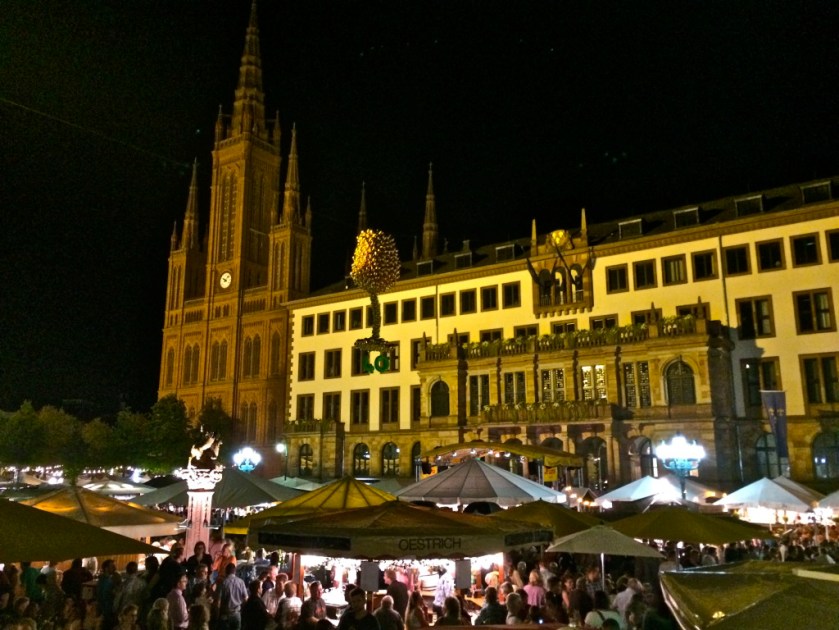
This year I went into the festival armed with more wine-knowledge than ever before. Yes, Rieslings are everywhere. Dry, half dry, semi sweet, sweet, sparkling. All the Rieslings of the rainbow. But what about Mueller Thurgau, and German Pinot Blanc, Gris and Noir? I needed to try those. And what were these Weissherbst and Blanc de Noir wine on the menus? At 2-3 Euros per 0.1ml glass, you don’t go broke giving them all a shot. It was both a great wine education and a grand party.

So let me tell you quickly some things that I learned:
1) Mueller Thurgau – a grape varietal invented in 1882 by a Swiss man at Geisenheim University, the well-known wine institute in the area – tastes quite a bit like a Sauvignon Blanc. It has a floral and vegetal nose and flavour, but is less harsh than some, more like a smooth, soft New Zealand Sauvignon Blanc.
2) Weissherbst and Blanc de Noir are the same thing (German and French christening). They can only be a varietal wine (meaning, be made only from one type of grape), and in this area at least, they come from the Pinot Noir grape. The wine produced is very light pink in colour. To achieve this, the grapes are gently pressed and the skins are quickly removed afterward. They do not in any way taste like a traditional red Pinot Noir. They differ from traditional Rosés because red wine can be added to Rosés to change the colour and flavour. I was familiar with Blanc de Blanc and Blanc de Noir Champagnes, but not in wine-form. See, Winefest is educational! Hoorah!
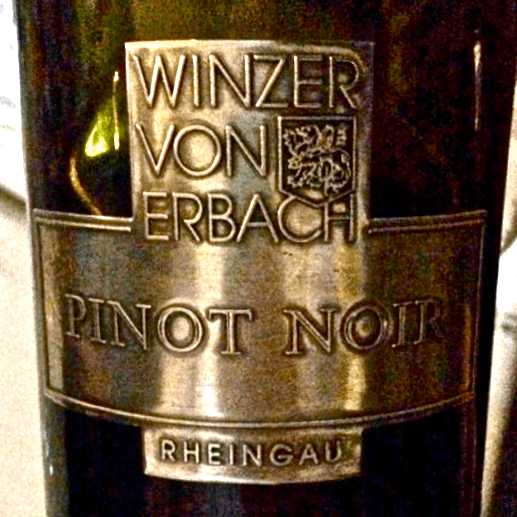
3) I discovered the best gosh darn German Pinot Noir in nearly three years living here. Hallelujah! Barrel aged in American and French oak for 26 months, this is a big, bold, smoky red. The only qualm I have with it is that no matter how deliciously luxurious it is, I do not find it reminiscent of a typical Pinot Noir. It has lost all varietal character. Pinot Noirs tend to be light, sour, a little spicy and earthy, and taste of red fruits. No matter – it’s tasty!
To many people, this festival is the highlight of the summer festival season (and, admittedly, we take ownership and call it the “Wiesbaden Winefest”). They fill the glasses high and there’s something here for every wine lover.

 heatheruncorked.com