Behind the Counter – Wine Tasting

Introducing people to wine you are proud of is the rewarding finale to the year-long-plus of work you know went into making every drop of the good-stuff. With so many wines out there to choose from, when you can share stories behind the wine and the wine making process it adds a level of personal affiliation that connects customers to the wine.
IMG_1655-1024x768
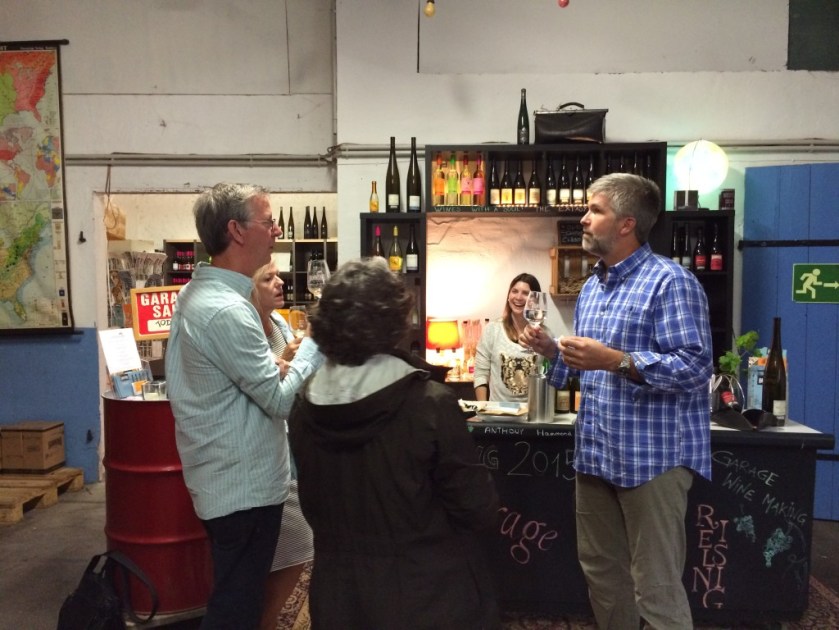
Lively wine discussions

Last week I had the pleasure of leading a wine tasting with some friends from out of town (well, out of country). It was a blast! Here was the count:

  • 2 Seccos
  • 1 Sekt
  • 1 Weissburgunder
  • 1 Grauburgunder
  • 1 Auxerrois
  • 1 Riesling trocken
  • 1 Riesling Kabinett mild
  • 1 Riesling Spätlese mild
  • 1 Spontaneously fermented Riesling Spätlese feinherb
IMG_1594-e1440450733346-1024x417
So many options!

Now, with serious wine tasters, a wine evaluation starts with an assessment of colour, hue, and consistency, then aroma, then the flavour and mouth feel, and finally the finish.

When ascertaining whether a wine is great or not, tasters look for qualities based on the following criteria:

Varietal character: how much the wine represents the grape it comes from

Integration: how well all elements of the wine fuse together harmoniously

Expressiveness: how clearly defined and focused the aromas and flavours of the wine are

Complexity: that intriguing force that pulls you to the wine, sip after sip

Connectedness: how well the wine embodies the land and environment it comes from

This high-level evaluation is certainly not necessary if the point of visiting a winery is simply curiosity and the search for tasty, drinkable wine. However, it is always nice when people feel open to talk about the wine, the flavours, food pairing ideas, etc. This communication makes a tasting a much more interactive and exciting exchange.

In the end, nothing can beat pouring tasting after tasting, telling a story through the order of the wines, engaging in bright conversation, and enjoying a jolly, joyous wine-fueled atmosphere with friends and wine enthusiasts.

Clarifying

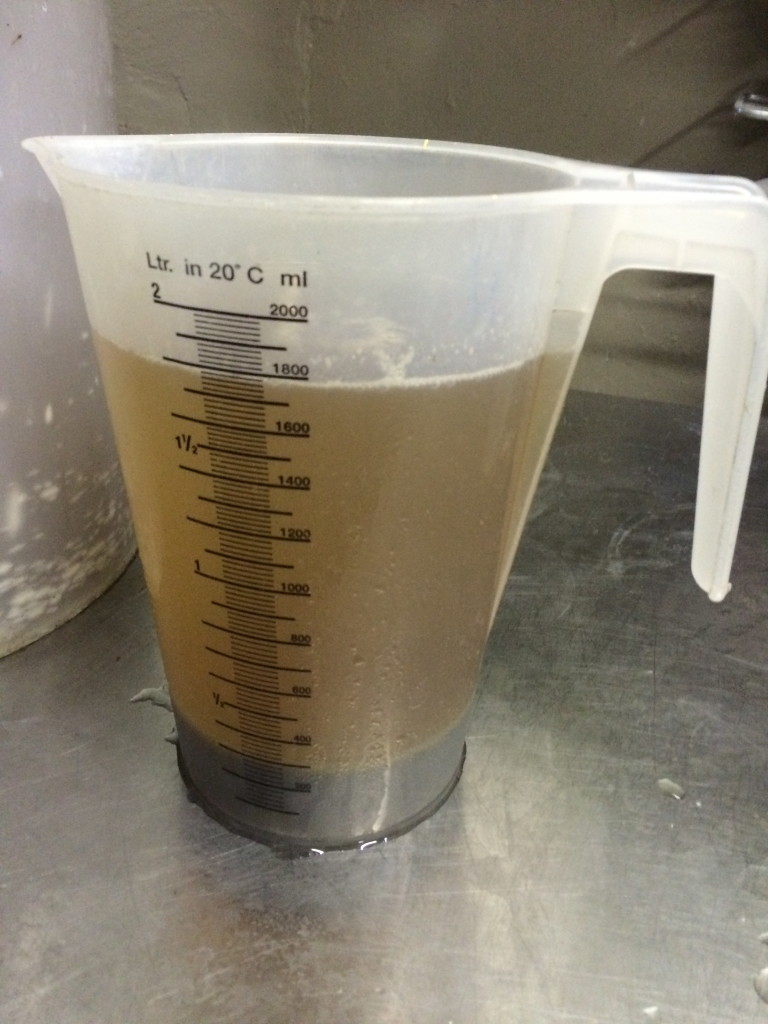
The clarification of wine must (juice) works through positive and negative electrical charges or through absorption in order to drag suspended particles down to the bottom of tanks to settle. Various products are used before filtration, during filtration, or just before bottling. Attention! Too much filtration can strip the wine of its flavour and character.

Screen-shot-2015-08-15-at-12.59.27-PM-e1453401527489-251x300
Sediment in tank

The following are brief descriptions of the clarifying products that I have seen used:

Bentonite (negative charge) is added to remove large particles. It comes as a powder-clay consisting of calcium and sodium. After being mixed with water, the slurry is added to the wine. The bentonite chemicals react to the protein elements in the wine (mainly dead yeast), bonding to them, making them heavy, and dragging the now large particles down to the bottom of the tank. The riper the grape, the more bentonite is required.

Activated charcoal (neutral charge) absorbs bad odors and browning colours caused by oxidization.

Silicagel/Kieselgel (negative charge) removed bitterness from wine and clears out haze. It is most commonly used in combination with gelatin.

Egg Whites (positive charge) or the technical term for the protein found in egg whites, Albumin, is used to reduce astringency and decrease spoilage. It is often used in red wines as it doesn’t react with the tannins and also keeps the red colour intact. You can quite literally use the whites of eggs separated from the yolk, but powder form is safer as you reduce the risk of bacteria contamination.

Flora Clair (positive charge) is derived from plant proteins. It is also a gelatin replacement and thus when used can make the wine, technically speaking, vegan.

Sulfuric acid is added to reduce the affect of Acetaldehyde in wine. Acetaldehyde is a naturally occurring organic chemical compound and a by-product of yeast fermentation. It produces a butter-like smell and can cause wine spoilage. Adding sulfuric acid to wine can protect against this. It is a preservative, antibacterial and antioxidant. Sulfites are found naturally in fruits (and thus wine). Therefore, even wines proclaimed to be “sulfite-free” do contain the chemical, it’s just not deliberately added. Fun fact: dried fruits contain much higher quantities of sulfites than wine. Unsurprisingly, sulfite-free wines retain this peculiar scent to some degree.

IMG_1743-768x1024
Example of visible separation

Dangers in the field

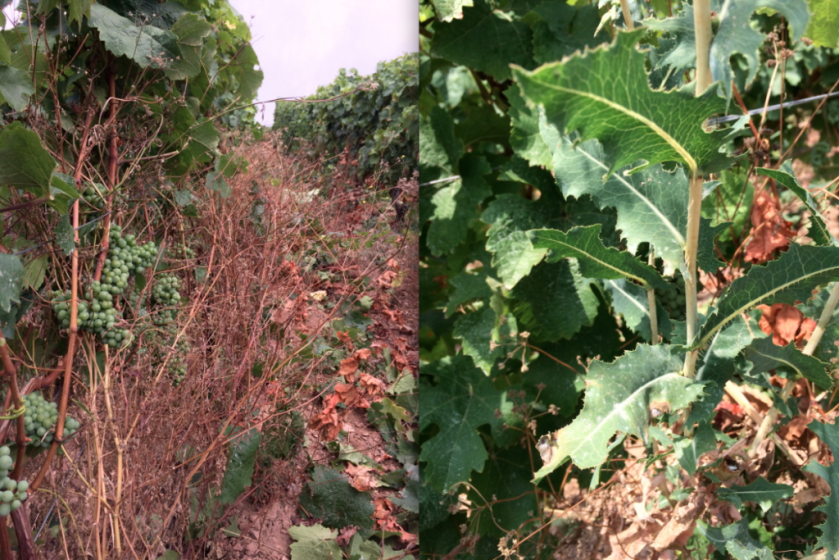
As a gal who spent a summer planting trees in Canada, I’m prepared for uneven terrain, bugs, the natural elements, and the physical labour. I’ve got my sturdy hiking boots, gardening/work gloves, sunscreen, a hat, water, and no matter how hot it is I NEVER WEAR SHORTS. Nope. It’s just not worth it. While there is no fear of bears, or moose, or black flies here in the vineyards, there are twigs and bushes and thorns and rogue vines and, well, nature, galore.

Screen-shot-2015-08-14-at-7.41.16-PM-1024x683
Exhibit A: Battling prickly scrub and thorns.

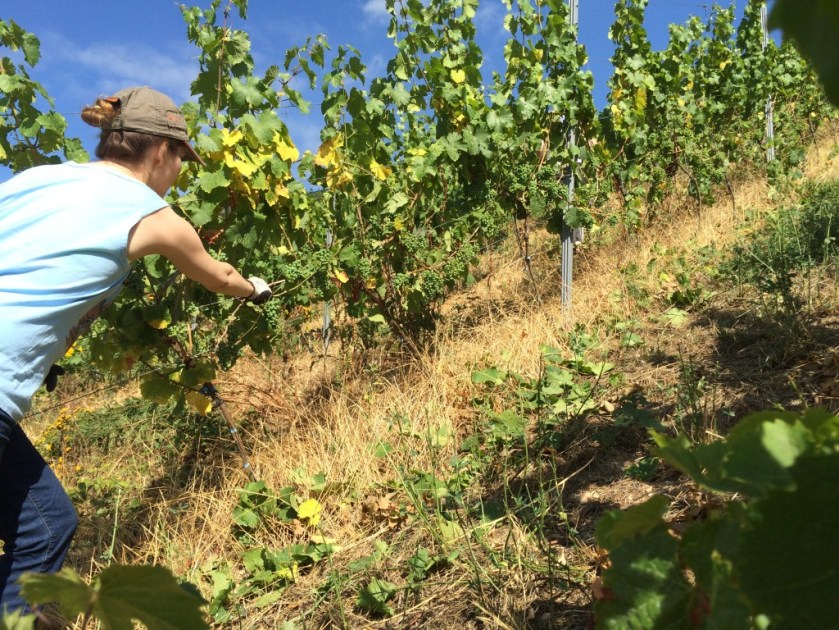
Why are the rows not cleared of this brush, you ask? Yes, some are, but many are not for the same reason that these vines must be worked by hand. Two words: steep slopes. While sloping vineyards produce notoriously great wine due to the sun exposure, working at a 33-degree incline can be a little, shall I say, lopsided. Spending the entire time pulling leaves off of only one side of the vines (see article “First Days in the Field”), you end up a wee bit slanty (as well as with an uneven suntan—cough! sunburn). On the bright side, every day I feel stronger, and every day it gets a little easier. Just watch that you don’t take your newly developing sense of the all mighty vineyard power out on the growing grapes.

Screen-shot-2015-08-14-at-7.37.38-PM-1024x636
Exhibit B: Burrs. Everywhere.

Gear is also important. The boots I wear have been fantastic! My favourite feature is the low back on the boots. It really makes walking on steep slopes more comfortable. In harvest season I will wear waterproof, steel-toe boots. However, even though the boots give me stability, and the gloves I wear protect me from most cuts (as well as give a psychological sense of fearlessness), it seems that blisters are inevitable.

Lastly, as one prone to daily sun sneezes, I have to imagine that allergies would be a nightmare out in the fields. At least it wouldn’t be an allergy to wine itself that stops you from enjoying a well-deserved glass of at the end of a hard day’s work.

First days in the field

On the slopes above the Rhein River in Rüdesheim, Germany, I begin my internship working in the vineyards. This is my first week and there is so much to learn.

As I drive through the vineyards on route to our destination, I pass tourists and locals alike walking along the paths. In Germany, it is completely normal – and indeed commonplace – for people to wander through privately owned vineyards.

I always wondered whom these rows and rows of vineyards belonged to. A patch of pinot noir for winery x here, a patch of riesling for winery y there, so it goes.

unnamed
Looking out over the Rhein

The views are breathtaking from this vantage. It’s surreal to think that I have this opportunity to see, experience, and support the wine production process for this winery – from tending to the grapes, to harvest, to filtration, to bottling, and finally to selling (and tasting!).

IMG_1467-1024x768
Before and after leaf-removal

This week my job is to cull the leaves in front of the grapes to expose them to more sunshine and allow moisture to evaporate more quickly, thus reducing the chance of mold. I learn that on rows that run east-west one ideally takes the leaves off from the north-facing side. At a neighbouring vineyard, leaves had been removed from the south-side as well. The result? Sunburnt grapes. This ultimately affects the flavour of the future wine. Not good. On rows that run north-south, we pulled from the east-facing side to expose the grapes to the morning sun.

IMG_1433-e1439057279633-998x1024
Sunburnt grapes

As I start my internship at the winery on a week with temperatures as high as 38 Celsius, the fieldwork is particularly grueling. The slopes are steep, the labour is physical, and the sun is hot!

It is exhausting, yet satisfying, oddly relaxing, and at the end of the day, fulfilling work.

IMG_1483-1024x768
Steep slopes!