The Wild Animal Brewing Co.

It’s happened. The yellow DHL leaflet addressed to Heatheruncorked (I feel like a superstar/the delivery guy was very confused – still a win!) heralds the end to my eagerly anticipated special beer delivery. Sound the Glockenspiel! With the beers settled in the fridge and smooth jazz playing in the background I settle in for the evening. The mood needs to be just right. I put aside my wine glass for the evening and swap it out for a Bier Stein (– just kidding, I still used a wine glass, a giant red wine glass).

2-300x300

Looking at the sleek, modern, graphic labels and marketing merchandise, I’d be excused for thinking it a trendy American microbrew. Or is it a stoic German Pils? We are in Germany after all. American it is not. German and Australian it is – in culture and parentage. And I have just been invited to the bris.

Michael and Chloe Stanzel, an Australian-German mash up extraordinaire based out of Koblenz, are celebrating the 3-month anniversary since the arrival their first official child (although I’m sure the previous illegitimate children brewed in their apartment kitchen where just as loved).

Congratulations The Wild Animal Brewing Co.!!
1-225x300

These 0.33L bundles of bottle-fermented joy were conceived by Michael, a Brewer by trade, and his fireball-of-an-alewife, Chloe, through Immaculate Conception – just kidding. In truth, I only know bits and pieces about how hard this kick-ass duo has worked to realize their dream. From what I gather, long days, night shifts and minimal sleep are just the beginning. From working real people jobs, to crafting their babies, to marketing the hell out them:

IT’S

DAMN

HARD

WORK

//giphy.com/embed/3o6Mb3rMcNRdCVM4k8

So let’s meet the triplets, shall we?

3-300x300

Blue Throat Pils: Citric, passion fruit, with very slight banana notes. Bitter (but not too bitter). Malty (but not too malty). The super fly label makes my brain think it tastes nothing like a traditional German Pils. How could it? It’s made using a strain of yeast called Australian Galaxy. Far out-back! It certainly is refreshing.
5-300x300

The Hare IPA: Golden amber in colour. Peach, nectarine and apricot aromas and flavour. You expect a hoppy bitterness, but instead the fruitiness lingers and is punctuated by a caramel malt finish. Gosh darn the best IPA I have ever had.

4-300x300

Coffee Oatmeal Stout: Malt forward with expressive roasted caramel, coffee and dark chocolate. It has a rich flavour with a mild bitterness. Rather than being thick and creamy, it manages to be both full-bodied and very light and easy drinking.


To paraphrase Aristotle in his writings on Nicomachean Ethics: like a great work of art, nothing could be removed or added to this beer without destroying its goodness. Perfection is found in the balance and purity of its exactness. Boom.

IMG_0622-300x300

Now go check them out & embrace your inner wild animal and buy ALL DA BEERZ!!! 

http://www.thewildanimal.de/

Instagram: @thewildanimalbrewingco

Facebook: http://www.facebook.com/thewildanimalbrewingco/

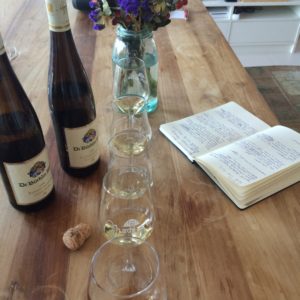
Vertical Tasting: Dr. Buerklin-Wolf

DR. BÜRKLIN-WOLF, Ruppertsberger Hoheburg, Pfalz, Erste Lage, Riesling Trocken

Quick Overview of Mini Vertical:

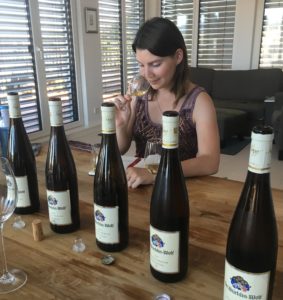
Notes: Dr. Bürklin-Wolf’s wines are biodynamic. The Rieslings tasted in this mini vertical are overall insanely well integrated and balanced. Absolutely incredible finesse, structure, and mouthfeel. These are not overly fruity Rieslings, which makes the other perfectly balanced attributes all the more important. ABV around 12.5% for each vintage.

IMG_4757-300x3002014: Smooth, fading flint, very tart, wet rock, faint fruit – hints of banana and barely ripe peach.
2013: Fan favourite. The quintessential definition of integration in wine. Light nose, but opened up after 3 days in the fridge. Limestone, saltiness. Not particularly fruity, but also not overly minerally, acidic, or alcoholic in flavour. It’s everything and nothing at the same time.

2012: Smooth, thick, full-bodied, and gentle. Fruitiest of tasting, with strong, ripe citrus and apricot. Elegant and balanced.IMG_4770-e1473619318195-283x300

2011: Much more lean and the most different in this vertical tasting. Petrol, hay, barnyard, and overly exaggerated, candied aromas. Smells like a sweet wine, a kin to an older Spätlese. Transforms in the mouth into a more caramel finish, but in the end this falls outside the expected Dr. Bürklin-Wolf Ruppertsberger Hoheburg style.

2009: You can smell the age on this one. Burnt, candied aromas, cooked vegetables (asparagus, artichoke), with still soaring acidity after 7 years that was out of balance.

https://www.buerklin-wolf.de/

GG Tasting

Großes Gewächs

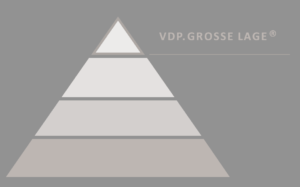
A classification in Germany to denote wine coming from top quality single vineyards, Grosses Gewächs are dry wines that come from Grosse Lage sites. Grosse Lage, meaning “great site” is the German version of Grand Cru vineyards in France. Grosses Gewächs, meaning “great growth”, are additionally prestigious due to the dry vinification style.  These classifications only exist within the voluntary and selective VDP (Verband Deutscher Prädikats und Qualitätsweinguter = the German Association of Special Quality Wine and Quality Wine Estates). This classification came into existence in 2001. Previously, the Rheingau region had used Erstes Gewächs as their top quality level, which them became Grosses Gewächs after the VPD introduced the new classification system.

Screen-shot-2016-08-24-at-2.33.22-PM-300x187

That’s not to say those who are not members of this association can’t possess top quality vineyards and proceed to produce dry wines from them, they just don’t get the GG stamp on the label. To learn more about the Grosse Lage requirements – yields, allowed grapes varieties, etc. –  please visit the VDP website here: http://www.vdp.de/en/vdp/klassifikation/the-refined-vdpclassification/vdpgrosse-lage/.

Tasting

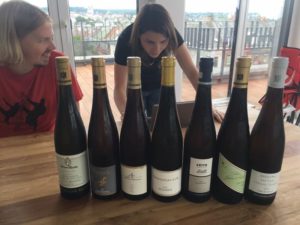
With 7 bottles of GG-quality wine from the Rheingau, Pfalz, and Rheinhessen to taste, ranging from 2012-2015, a great spectrum of colours, aromas, and flavours within the GG classification could really be understood.

gg-tasting-1-300x225

2014 Balthasar Ress, Berg Rottland, Rheingau

With a classic Rheingau Riesling green apple aroma and notes of petrol already showing through, this GG shows early promise – and perhaps some early oxidization. The citrus presents more as pineapple, and due to some mild oak treatment, a full mouth creamy feel transforms into a caramel aftertaste.

2013 Fendel, Kirchenpfand, Rheingau

This was the only disappointment of the tasting. An off-putting chemical aroma, inducing memories of summers spent by chlorine pools, first attacks the senses. Rotten peach and pear primary aromas transform into a flat, unimpressive dead end. It is too sour and too creamy all at the same time.

2013 Leitz, Berg Roseneck, Rheingau

This wine is no fruit bomb. But it doesn’t have to be! Leitz’s GG stands out by it’s thick minerality, terroir-focus, juicy concentration, and delicate mouthfeel. This wine is all about the palate. With a hit of acidity in the back of the jaw, this wines makes me salivate. Mmmmmm. This was the fan favourite amongst the tasters.

2012 August Kesseler, Berg Roseneck, Rheingau

Two Berg Roseneck GGs in a row! This should be interesting! This one presents the most golden colour so far in the tasting. On the non-fruit side, this GG has a subtle spontaneous yeast stink, a small touch of petrol, some faint CO2, hints of cedar, and a buttery, toasted caramel flavour. Looking into the fruits and you can find apples, canned peach, canned pear, and citrus. Definitely a winning GG!

2012 Peter Jakob Kühn, Doonsberg, Rheingau

Even more golden in colour than the Kesseler GG, this wine has a overly prominent buttery, caramel nose with little fruit to balance it out. Smelling and tasting like a old wooden cabinet, it is very oaky. These harsh aspects do eventually fade into a nice toasty vanilla aftertaste.

2012 Dreissigacker, Aulerde, Rheinhessen

While technically not a GG as Dreissigacker is not part of the VDP, Aulerde is a top quality vineyard in Rheinhessen. Coming from Rheinhessen, in contrast to the previous GGs from the Rheingau, this wine is, unsurprisingly, less acidic, yet maintains a marvelous crispness. It has a mild sulfur stink and shows complex fruit and citrus flavours of bruised fruit, and a note of caramel brioche.

2012 A. Christmann, Idig, Pfalz

This wine has a lot of different flavours going on. A fruit bomb through and through, peach and overripe banana are the stars of this wine. But mixed with petrol aromas and heavy toasted caramel, it is unintegrated and unbalanced. Too much of everything. Maybe in a few more years it will blend together in to wonderfully complex and fascinating GG.

August Kesseler Tasting

Spring has sprung and I have finally found a few moments to write a post. With the sun shining and a glass of Rheingau Riesling by my side, I feel like writing a few words about some of August Kesseler winery wines. First off, what fantastic labeling they have! Really uncomplicated, bold, modern, colourful, simplistic, eye-catching, and fun.

The August Kesseler winery resides in the village of Assmannshausen in the Rheingau, with its vineyards located in Assmannshausen, Rüdesheim and Lorch. Assmannshausen is known for high quality red wines in this otherwise predominately white wine Riesling wine region of Germany.

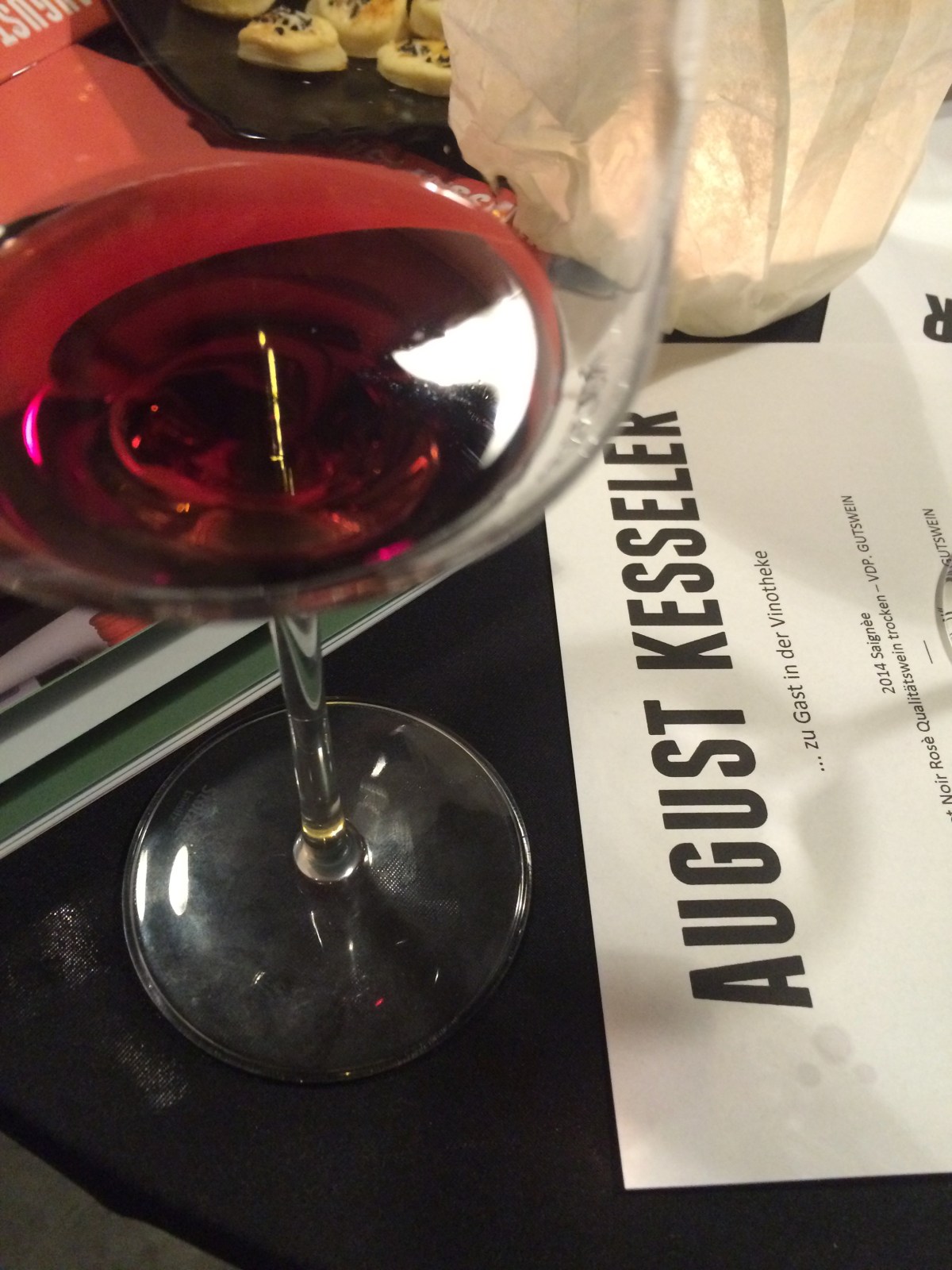
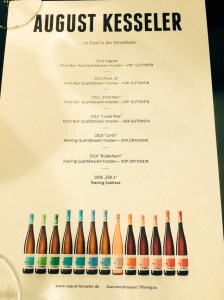
I attended a tasting of August Kesseler wines a little while back and wrote down some tasting notes of the 7 wines provided. Allow be to stretch my currently much under worked tasting note writing muscle as I try my best to describe these wines.

One

2014 Saignée

Saignée, French for “bleeding”, is a rosé made purely from red wine (no mixing). It is taken as mash directly following the red wine pressing, allowing the remaining red wine increased skin contact concentration during maceration, while the rosé wine is fermented separately. Ok, lesson over. This rosé punches full force with strawberry, raspberry and cassis aromas, and a refreshing hit of acidity. A paradox in a bottle – the dry and fruity characteristics of this wine makes it the perfect summer sipper, yet its juicy, full-flavoured elegance and power calls for a brisk autumn evening meal accompaniment. A most versatile rosé to enjoy anytime.

Two

2012 Pinot Noir “N”

Lightly oaked with 2.4-4g of total acidity, this low acid Pinot Noir is mellow and easy-drinking. Bordering on too simplistic, this wine relies on its classic cold climate Pinot Noir sour cherry and red current fruits.

Three

2011 Pinot Noir

This is the epitome of how an Assmannshausen Pinot Noir should taste. Less sour cherry, more berries and deep, mineral elegance. Aged significantly in oak barrels, stewed fruits dominate, adding a sweet quality to this dry wine.

Four

2013 “Cuvée Max” Pinot Noir

Confronting the taster with a wild, untamed nose, this heavy-weighted, pricey PInot Noir jumps around on the tongue. Dominant tannins and a dark smokiness play along side a subtler sour cherry and cassis light fruitiness. This Big Red aches to be tamed by the invitation of food.

Five

2013 “Lorsch” Riesling

The Lorsch terroir and extreme minerality exude from this dry Riesling, as notes of honey, white pear, peach, green apple and citric grapefruit unfold on the palette sip after sip.

Six

2014 “Rüdesheim” Riesling

Dim hints of stone fruits, cassis, prune and canned peach provoke the senses upon first meeting. A hit of anise and a floral character follow. Slate on the nose, acidity and soft minerality on the tongue, and a clean finish round out this atypical Riesling.

Seven

2006 “530.3” Riesling

Honouring the kilometre marker to Holland in the Rheingau River, this golden-coloured Spätlese with 60g sugar is looking good for its age. After 10 years, the expected petrol aromas are soft and the viscosity moderate. This drinks like a sweet, if yet otherwise, normal wine. Dried apricots and dried pineapple are pronounced and delightful, but most exciting perhaps is the – wait for it – while chocolate flavour that lingers on the palette.

Merlot Tasting

Wine is wine is wine – said no wine aficionado ever. There are expectations in each bottle of wine. From blends like Bordeaux, where wine from the right bank is distinctly different from the left bank, to varietal wines, that is wine made from one single type of grape, understanding the wine’s profile is both a wine enthusiast’s hobby, and a sommelier’s profession.

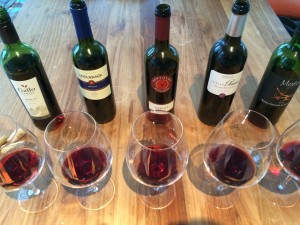
Trying to understand these characteristics in wine can be difficult. These are the typical, inherent aromas, flavours, body, etc. that you expect from a particular grape variety. What with so many options to choose from – from different price points to different countries- and there being only so many days in the week to try them all – sometimes you just have to buy a wide range and make your own tasting.

IMG_2949-300x300

The homework for today: Merlot.

My plan is to continue these explorations into wine profiles using only wines I can find for an average of 5€. The Canadian in me screams “this is impossible!”, but the German resident (and Wine Business student) in me knows that the average retail price for imported wines as of 2010 was 2.27€/L. So the quality might not be the best of the best, but I can find wines from the old and new world and use this experience to increase my knowledge on wine profiles.

The Merlot’s up to bat today include:

Gallo 2014, California: 4.99€
Undurraga 2013, Chile: 5.99€
Bertoldi Rotondo 2013, Italy: 3.99€
Chateau Penin Grand Sélection 2010, Bordeaux (found this one in the house, but retails for about 10€)
Baron Philippe de Rothschild 2014, Pays D’Oc: 3.79€


IMG_2948-300x225

The verdict? As expected, the warmer climate grown grapes presented with much stronger blueberry/blackberries and vanilla aromas and flavours, with the California Merlot striking an in-your-face blow. Too much so in my opinion. The Chilean was a little subtler and more balanced with cedar, raspberry, and plum flavours, in addition to blueberry and vanilla. The Italian was the lightest in colour, had the lowest alcohol content in the tasting at 12%, and tasted more of sour red current, cherry, raspberry, and herbs. The two French wines differ noticeably, though the age and quality may have played a difference. The Bordeaux was juicier and slightly fruitier than the Pays D’Oc, while the Pays D’Oc was more herbaceous.

Merlot may not be my wine of choice, but through practice (yay wine tasting!) I will be better able to identify Merlots in the future. Practice makes perfect!

Pinot Noir – Rheingau Tasting

Pinot Noir (or Spätburgunder as it is known in German) is Germany’s most important red grape variety. Germany is also the third largest producer of Pinot Noir internationally.

For anyone who has seen Sideways knows, Pinot Noir is delicate and subtle, needing great wine makers and grape growers to make them spectacular. They are finicky and disease prone, and lighter in body and colour than most all other red wines. This wine is deceptively complex, exemplifies the unique characteristics of the terroir, and is easy to pair with so many foods.

IMG_2369-225x300

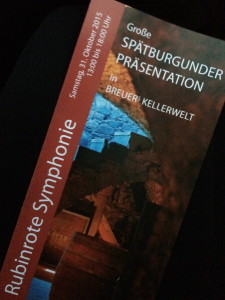
“Ruby Red Symphony”

On October 31st, this Pinot Noir tasting event held in the wine cellar at Georg Breuer Winery in Rüdesheim brought together 18 Pinot Noir producers from the Rheingau region for a day of “ruby red symphony”, as the event name in German translates.

In attendance were the following wineries:

  • Fritz Allendorf
  • Walter Altenkirch
  • Bischöfliches
  • Georg Bruer
  • Chat Sauvage
  • Diefenhardt’sches
  • Goldatzel
  • Hessich State Winery from domain Assmannshausen
  • August Kessler
  • Klaus König
  • Robert König
  • Krone – Assmannshausen
  • Künstler
  • Hans Lang
  • Laquai
  • Gerog Müller
  • G.H. Von Mum
  • Thilo Strieth

From fresh and fruity to smoky and bold; from sparkling wine to blanc de noir still wine style; this tasting event had something for everyone. With a 25 Euros per person entry fee however, the price was a bit steep. But the opportunity to sample great Pinot Noirs from the Rheingau made it worth it.

IMG_2367-225x300

Sour Cherries, Cassis, Raspberries, Licorice, Oak…

My top pick of the day in the rosé category goes to the 2014 Weiβherbst from Gerog Breuer, with dynamic notes of pear, licorice and lemon.

In the bubbly category, the winner is the non-vintage red sekt brut from Hans Lang Winery, a nice and dry sparkling wine with notes of cassis and raspberries.

For good old Pinot Noir wine, the first prize goes to Diefenhardt’sches Winery’s 2014 WILDSAU GG Spätburgunder trocken, with 18 month in oak, lots of bright, balancing pizzaz to go with the dark and brooding smoky complexity.

The lesson of the day is to go out and find yourself a German Pinot Noir to try. They come in many different styles, so find the one that suits you best.

A Journey Through French Whites

Apart from perhaps Chardonnay, when you think of France, you think of red wines, n’est-ce pas?

From different regions, with different grapes varietals, and at different quality levels, this journey through French whites paints a fairly inclusive picture of the French white wine scene. Obviously this is not a complete showing of all white wines available in France, but it is a starting point to understanding the range of whites available.

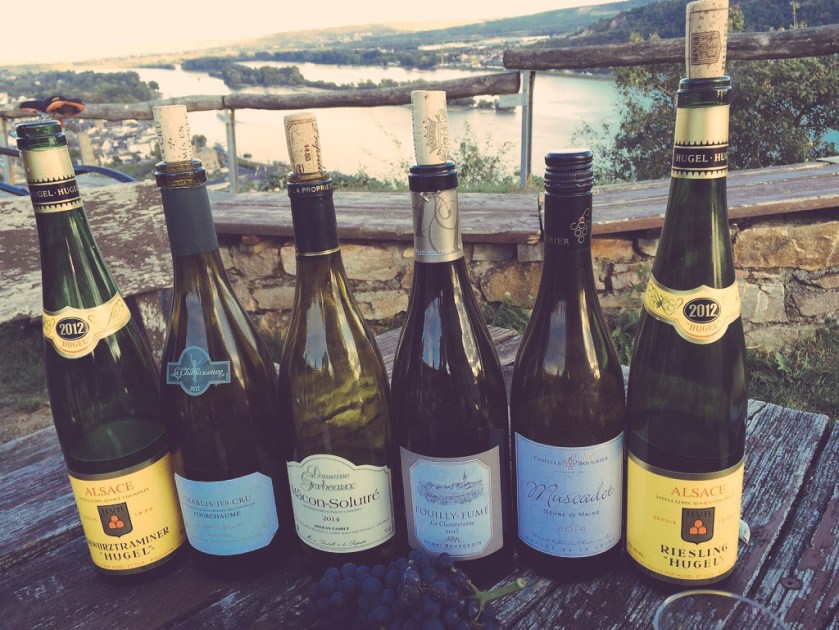
IMG_2051-1024x768

From right to left:

2012 Riesling, Alsace

Alsace is a region of France that boarders Germany. In fact, the land has been tossed back and forth between German and French rule throughout the centuries. Understanding this, the production of Riesling makes sense as an extension of the German quality of the region.

Alsace is the only area in France that names its wines based on the grape varietal, thus making it the easiest wine region in France to understand. The vast majority of wine is also made by producers, rather than by specific châteauxs.

This dry Riesling has floral and minerality on the nose. Petrol notes are already evident in the 3 year-old wine. This wine presents itself a little creamy – a change from many of the clear and unmuddled Rieslings throughout Germany. In true Riesling style, it has the trusted acidic kick. At 12%, the alcohol is evident in the body and flavour. Flavours of under-ripe plums, limy citrus, flint, wood, and stone. Has a big, long, floral finish.

2014 Muscadet, Loire

This wine is made from the Melon de Bourgogne grape, and yet is not from Bourgogne (Burgundy in English). It comes from the Loire region closest to the Atlantic Ocean. This is important in understanding the coastal conditional under which these grapes grow, versus continental.

This wine reminds me of a Sauvignon Blanc in that it has a vegetal and floral quality. It is light and has notes of honey, anise, and sage.

2013 Pouilly-Fumé, Loire

This wine is 100% Sauvignon Blanc. On the nose, it has an exaggerated sweet floral quality. As one would assume for a Sauvignon Blanc, it is a little vegetal and smells and tastes like grapefruit (though lacking in the notorious “cat piss” characteristic). It is smooth, with strong under-ripe flavours. It has a bitter aftertaste, but no sharp acidity.

2014 Mâcon-Solutré, Burgundy

Like all whites from the Burgundy region, this is a Chardonnay. This particular region (Mâcon-Solutré) is known for lighter Chardonnays. This wine is still very fatty, nutty, and buttery. There is no crispness or acidity on the nose, and only a faint moment of clarity on the palette.

2012 Chablis 1er Cru, Burgundy

This Chardonnay is of notable higher quality and is longer aged than the 2014 Mâcon-Solutré. As expected, it is indeed rounder and more dynamic. There is a refreshing acidic note, a little more oakiness, but is still very fatty, nutty, and buttery.

2012 Gewürztraminer, Alsace

Coming full circle, we find ourselves once again in Alsace. Alsace is perhaps best known for their Gewürztraminer. Though fairly typical in flavour, this wine sings quite a “one note” song. It is overtly sweet, with strong, perfumey rose, lychee, and orange blossom aromas. The only characteristic that adds to its complexity is a slight nutmeg attribute. The taste also lingers due to the higher sugar levels.

Pinot Blanc vs. Pinot Gris

It’s always interesting to compare two wines side-by-side.

Here we have a 2011 dry Grauer Burgunder (pinot gris) and a 2012 dry Weiβer Burgunder (pinot blanc) from the winery Martin Waβmer from the German state of Baden.

According to their website, they often use “wild” (naturally occurring) yeast for fermentation.

Our wines are brought to fermentation almost exclusively in a “dry” process, wherever possible with their own natural yeast, and are left to ferment for longer than is normal, before maturing according to the age-old tradition of Burgunder wines. (http://www.weingut-wassmer.de/)

Grauer Burgunder: Orange tinted colour. Slate, minerality, rose petals, earthy. Not much acidity, a mild pop of citrus and orange peel. On it’s own this wine is lacklustre, bland, and quite thin and watery. Paired with salty and fatty foods however, and this wine really develops rounder, more complex flavours. Try it with sausages, potatoes, garlic bread, and salty cheese.

Weiβer Burgunder: Green tinted colour. Bright, citrus punch. Refreshing and clean. Nice balance of acidity and sweetness, with a hint of minerality. This wine can be paired with so many “simple” foods, or enjoyed on its own.