

 Wine and travel is a fascinating combination. The stories of the vines and wineries can tell a micro-story of the whole place – of the history, anthropology, politics, technological growth, and social development of the region. Not only is this a great reason for anyone to learn more about wine (and take some sips along the way), but it means that wine tourism can be a highly educational and insightful way to spend vacations. Score!
When one works in the wine industry, the line between work and pleasure can become quite blurred – not that I’m complaining. Even when planning personal vacations, wine remains a very integral part of the experience. There is so much to learn and I never want to miss an opportunity to discover something new (and bring a few hard-to-find bottles back home). On my most recent travels to Gran Canaria in the Canary Islands, wine was no less important than sun and seafood. Luckily, local wine from the six wine producing islands could be easily (and often affordably) found in restaurants, markets, and grocery stores. Still, a winery visit was in order.

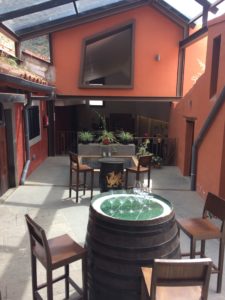
I’ll admit that I faced two barriers to individual winery visits on the Island: the lack of automatic cars available for rent, and a fear of driving on those windy, cliff-edge, mountainous roads. That is not a recipe for a relaxing (and wine-filled) vacation! Luckily, a friend and Gran Canaria native, Arcadio, was able to book a personal tour and tasting at the largest winery on Gran Canaria AND it was along an easy-as-pie bus route. Enter, Viñas y Vino Bodega Hoyos de Bandama, or HB for short.
Today HB is a vibrant, friendly, technologically impressive operation nestled next to an entrance to the impressive volcanic Caldera (crater) de Bandama, but to start the story from the beginning, it is interesting to note that vineyards are not native to the Canary Islands. As an affect of the conquests of the Canary Islands five centuries ago, vineyards with grapes varieties imported from Italy, Spain, Portugal, Greece, etc. were planted. At this time, a Flemish merchant named Daniel van Damme, who decided Gran Canaria was far enough along his trip to the new world, decided to put his European wine knowledge to work and cultivated vineyards around Bandama. Natural selection bread and determined the most suitable varieties that are used to this day. As these plantings occurred prior to the phylloxera outbreak, all vines continue to grow on their natural rootstock. Then three hundred years ago Salvador De la Coba bought the properties of Bandama and created a winery on the site where HB sits today.
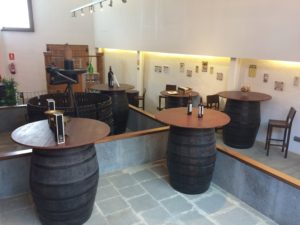

In 2003, at what must have been a very young age, María Jesús Delgado de la Coba Cayón took over operations at HB and has since been modernizing, upgrading and expanding. At the most basic level, María had to invest in bottles and bottling equipment, as prior to her takeover locals would still come to the winery and fill their own empty jugs and containers. It took 4 years to get the winery up to modern industry standards, and still many more years to get permission to renovate. And while the technological investments and renovations were necessary to transform HB into a profitable, 21st century working winery, tradition is still a key driver.
In fact, María has a 3-pillar vision for HB:
- Convincing locals to revert back to a traditional (grape) agricultural lifestyle
- Sales
- Quality winemaking
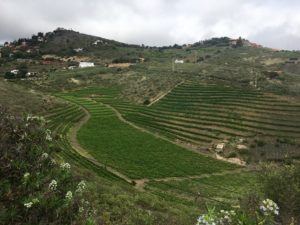
You see, what HB needs is more grapes. With a current production of 80,000 bottles but a capacity of 120,000, the new tanks and cooling systems and bottling line and equipment are ready and waiting to kick it up a notch. Slow bureaucracy on the Island may be a time-limiting factor, but as María said, convincing the local people to give up their air-conditioned office jobs for the hard, uncertain labour of the vineyards is risky.
HB is also unique in that they sell directly to customers themselves. Whereas most other wineries utilize a distributor, María prefers to maintain control of the selling process.


Finally, when it comes to the winemaking process, heat is always the enemy. This is why come harvest season, precautions such as manual nighttime picking, refrigerating grapes for 24 hours post-pick before pressing, and cooling white grape must and full red grapes en route to tanks for fermentation are vitally important in producing quality wine.
The white must goes on to ferment in stainless steal tanks, and while there is no barrel aging for HB’s white wine, they do spend 3 month on lees. The red grapes go through carbonic maceration and the juices are pumped-over in the tanks (remontage). They are then cellared in French and American oak barrels (low, medium and medium plus toasting) in a temperature and humidity controlled room. No fining is applied to any wine here at HB, but both red and white wines pass through sheet filters on their way to the bottling line. After bottling, the strict rule at HB is to let the bottles sit in the winery for double the amount of time that they were in barrels before sending to customers. The rationale behind this is that it gives the bottled wine the right amount of time to micro-oxidize, allowing the wood compounds to harmonize.
HB produces wines both traditional to the Island (Malvasia, Listan Blanco), as well as many international grape varieties (Merlot, Cabernet Sauvignon, Syrah). Three tour/tasting options are available at HB, however the difference is a simple question of how many wines you would like to taste at the end of the tour. Two wines for 10 Euros, three for 12, or four for 15. Naturally, the more, the merrier. Oh, and they are glass pours, not tasting pours, so sit back, relax, and enjoy.
With prices ranging from a reasonable 8 to 15 Euros for a bottle of their Caldera brand, after a few hours of touring and tasting it’s hard not to let your new found sense of kinship to the winery and its wines keep you overly austere.
What did I say at the beginning? It’s important to bring hard-to-find bottles back home. So following my own superb advice, bottles were bought, and this is why you always make sure to leave room in your suitcase.






 heatheruncorked.com