It’s happened. The yellow DHL leaflet addressed to Heatheruncorked (I feel like a superstar/the delivery guy was very confused – still a win!) heralds the end to my eagerly anticipated special beer delivery. Sound the Glockenspiel! With the beers settled in the fridge and smooth jazz playing in the background I settle in for the evening. The mood needs to be just right. I put aside my wine glass for the evening and swap it out for a Bier Stein (– just kidding, I still used a wine glass, a giant red wine glass).
Looking at the sleek, modern, graphic labels and marketing merchandise, I’d be excused for thinking it a trendy American microbrew. Or is it a stoic German Pils? We are in Germany after all. American it is not. German and Australian it is – in culture and parentage. And I have just been invited to the bris.
Michael and Chloe Stanzel, an Australian-German mash up extraordinaire based out of Koblenz, are celebrating the 3-month anniversary since the arrival their first official child (although I’m sure the previous illegitimate children brewed in their apartment kitchen where just as loved).
Congratulations The Wild Animal Brewing Co.!!
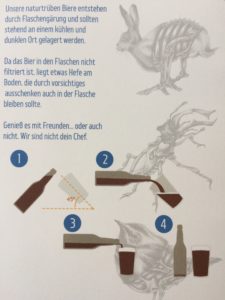
These 0.33L bundles of bottle-fermented joy were conceived by Michael, a Brewer by trade, and his fireball-of-an-alewife, Chloe, through Immaculate Conception – just kidding. In truth, I only know bits and pieces about how hard this kick-ass duo has worked to realize their dream. From what I gather, long days, night shifts and minimal sleep are just the beginning. From working real people jobs, to crafting their babies, to marketing the hell out them:
Blue Throat Pils: Citric, passion fruit, with very slight banana notes. Bitter (but not too bitter). Malty (but not too malty). The super fly label makes my brain think it tastes nothing like a traditional German Pils. How could it? It’s made using a strain of yeast called Australian Galaxy. Far out-back! It certainly is refreshing.
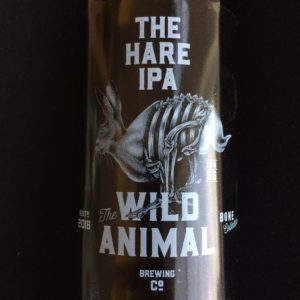
The Hare IPA: Golden amber in colour. Peach, nectarine and apricot aromas and flavour. You expect a hoppy bitterness, but instead the fruitiness lingers and is punctuated by a caramel malt finish. Gosh darn the best IPA I have ever had.
Coffee Oatmeal Stout: Malt forward with expressive roasted caramel, coffee and dark chocolate. It has a rich flavour with a mild bitterness. Rather than being thick and creamy, it manages to be both full-bodied and very light and easy drinking.
To paraphrase Aristotle in his writings on Nicomachean Ethics: like a great work of art, nothing could be removed or added to this beer without destroying its goodness. Perfection is found in the balance and purity of its exactness. Boom.
Now go check them out & embrace your inner wild animal and buy ALL DA BEERZ!!!
DR. BÜRKLIN-WOLF, Ruppertsberger Hoheburg, Pfalz, Erste Lage, Riesling Trocken
Quick Overview of Mini Vertical:
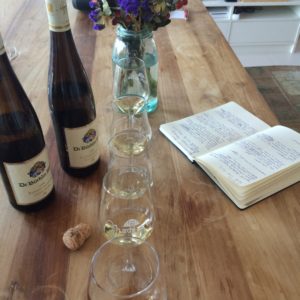
Notes: Dr. Bürklin-Wolf’s wines are biodynamic. The Rieslings tasted in this mini vertical are overall insanely well integrated and balanced. Absolutely incredible finesse, structure, and mouthfeel. These are not overly fruity Rieslings, which makes the other perfectly balanced attributes all the more important. ABV around 12.5% for each vintage.
2014: Smooth, fading flint, very tart, wet rock, faint fruit – hints of banana and barely ripe peach.
2013: Fan favourite. The quintessential definition of integration in wine. Light nose, but opened up after 3 days in the fridge. Limestone, saltiness. Not particularly fruity, but also not overly minerally, acidic, or alcoholic in flavour. It’s everything and nothing at the same time.
2012: Smooth, thick, full-bodied, and gentle. Fruitiest of tasting, with strong, ripe citrus and apricot. Elegant and balanced.
2011: Much more lean and the most different in this vertical tasting. Petrol, hay, barnyard, and overly exaggerated, candied aromas. Smells like a sweet wine, a kin to an older Spätlese. Transforms in the mouth into a more caramel finish, but in the end this falls outside the expected Dr. Bürklin-Wolf Ruppertsberger Hoheburg style.
2009: You can smell the age on this one. Burnt, candied aromas, cooked vegetables (asparagus, artichoke), with still soaring acidity after 7 years that was out of balance.
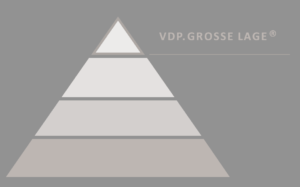
A classification in Germany to denote wine coming from top quality single vineyards, Grosses Gewächs are dry wines that come from Grosse Lage sites. Grosse Lage, meaning “great site” is the German version of Grand Cru vineyards in France. Grosses Gewächs, meaning “great growth”, are additionally prestigious due to the dry vinification style. These classifications only exist within the voluntary and selective VDP (Verband Deutscher Prädikats und Qualitätsweinguter = the German Association of Special Quality Wine and Quality Wine Estates). This classification came into existence in 2001. Previously, the Rheingau region had used Erstes Gewächs as their top quality level, which them became Grosses Gewächs after the VPD introduced the new classification system.
That’s not to say those who are not members of this association can’t possess top quality vineyards and proceed to produce dry wines from them, they just don’t get the GG stamp on the label. To learn more about the Grosse Lage requirements – yields, allowed grapes varieties, etc. – please visit the VDP website here: http://www.vdp.de/en/vdp/klassifikation/the-refined-vdpclassification/vdpgrosse-lage/.
Tasting
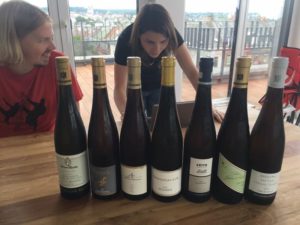
With 7 bottles of GG-quality wine from the Rheingau, Pfalz, and Rheinhessen to taste, ranging from 2012-2015, a great spectrum of colours, aromas, and flavours within the GG classification could really be understood.
2014 Balthasar Ress, Berg Rottland, Rheingau
With a classic Rheingau Riesling green apple aroma and notes of petrol already showing through, this GG shows early promise – and perhaps some early oxidization. The citrus presents more as pineapple, and due to some mild oak treatment, a full mouth creamy feel transforms into a caramel aftertaste.
2013 Fendel, Kirchenpfand, Rheingau
This was the only disappointment of the tasting. An off-putting chemical aroma, inducing memories of summers spent by chlorine pools, first attacks the senses. Rotten peach and pear primary aromas transform into a flat, unimpressive dead end. It is too sour and too creamy all at the same time.
2013 Leitz, Berg Roseneck, Rheingau
This wine is no fruit bomb. But it doesn’t have to be! Leitz’s GG stands out by it’s thick minerality, terroir-focus, juicy concentration, and delicate mouthfeel. This wine is all about the palate. With a hit of acidity in the back of the jaw, this wines makes me salivate. Mmmmmm. This was the fan favourite amongst the tasters.
2012 August Kesseler, Berg Roseneck, Rheingau
Two Berg Roseneck GGs in a row! This should be interesting! This one presents the most golden colour so far in the tasting. On the non-fruit side, this GG has a subtle spontaneous yeast stink, a small touch of petrol, some faint CO2, hints of cedar, and a buttery, toasted caramel flavour. Looking into the fruits and you can find apples, canned peach, canned pear, and citrus. Definitely a winning GG!
2012 Peter Jakob Kühn, Doonsberg, Rheingau
Even more golden in colour than the Kesseler GG, this wine has a overly prominent buttery, caramel nose with little fruit to balance it out. Smelling and tasting like a old wooden cabinet, it is very oaky. These harsh aspects do eventually fade into a nice toasty vanilla aftertaste.
2012 Dreissigacker, Aulerde, Rheinhessen
While technically not a GG as Dreissigacker is not part of the VDP, Aulerde is a top quality vineyard in Rheinhessen. Coming from Rheinhessen, in contrast to the previous GGs from the Rheingau, this wine is, unsurprisingly, less acidic, yet maintains a marvelous crispness. It has a mild sulfur stink and shows complex fruit and citrus flavours of bruised fruit, and a note of caramel brioche.
2012 A. Christmann, Idig, Pfalz
This wine has a lot of different flavours going on. A fruit bomb through and through, peach and overripe banana are the stars of this wine. But mixed with petrol aromas and heavy toasted caramel, it is unintegrated and unbalanced. Too much of everything. Maybe in a few more years it will blend together in to wonderfully complex and fascinating GG.
Reading through my posts, you can probably tell that I’m a Riesling junkie. Sure, the high acids can be lip-puckering and stomach-burning at first encounter, but when you live in a Riesling-centric wine region, you keep taking the hit. You know there is something fantastic in that glass of sassy freshness yet to be fully perceived or appreciated. Maybe it’s the crisp, bold flavour, low alcohol, and ethereal food pairing attributes that keeps pulling you in for another sip? It doesn’t take long until you begin to understand that Riesling goes great with everything. It even has the power to make the most loathsome moments endurable. Getting through the second week of dark, depressing January – there’s a Riesling for that. Sitting though Transformers: Age of Extinction your boyfriend made you go see – there’s a Riesling for that too. Hell, Riesling is so magical that it has the power to do all those things now or in decades time due to its exceptional aging potential. It’s truly a wine for all times and all occasions.
What’s more is that there are so many Rieslings from so many wineries in Germany (not to mention Alsace, Austria, Canada and the US) to choose from! After time you start to shy away from the sweeter “feinherb” Rieslings in favour of the dry “trocken” style. One day you wake up and realize you are, quite simply, addicted. Can you imagine a life without Riesling? What horror! You could try all the Albarinos, Sauvingon Blancs, Chardonnays, whatever you want, in an ultimately unsuccessful attempt to fill that Riesling void. Because in the end, as Sinead O’Connor sang “nothing compares to you”, my dear, under appreciated Riesling. Gosh darn people, even Jancis Robinson proclaims Riesling to be the greatest white wine grape in the world! Get with the program!
Speaking of Riesling and Jancis Robinson – a few months ago at the VDP Mainz Weinboerse (the Wine Trade Fair in Germany for top quality German wine), Jancis was honoured with the illustrious Golden Needle of Honour for her long-term personal commitment to strengthening the international image of German wine. Not only did I manage to catch a glimpse of her at this event, but I tasted enough excellent Rieslings to get a real good fix. Seriously, this is the place to be for a Riesling junkie.
So come one, come all to the House of Riesling. It’s like a really great secret neighbourhood clubhouse that should effectively be the most popular and biggest unkept secret of the wine world. Now go get yourself a bottle already!
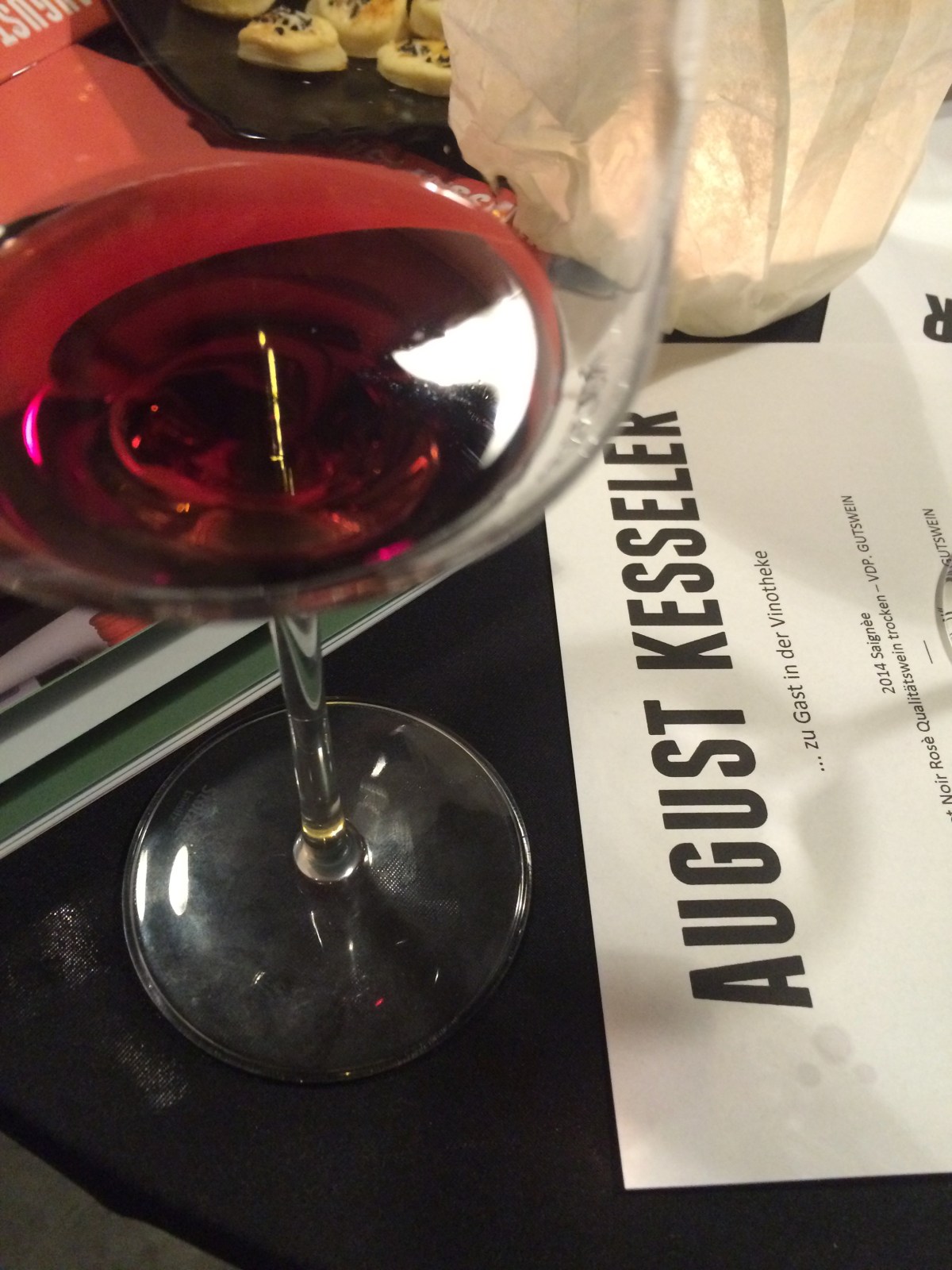
Spring has sprung and I have finally found a few moments to write a post. With the sun shining and a glass of Rheingau Riesling by my side, I feel like writing a few words about some of August Kesseler winery wines. First off, what fantastic labeling they have! Really uncomplicated, bold, modern, colourful, simplistic, eye-catching, and fun.
The August Kesseler winery resides in the village of Assmannshausen in the Rheingau, with its vineyards located in Assmannshausen, Rüdesheim and Lorch. Assmannshausen is known for high quality red wines in this otherwise predominately white wine Riesling wine region of Germany.
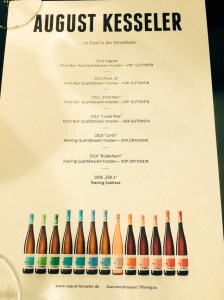
I attended a tasting of August Kesseler wines a little while back and wrote down some tasting notes of the 7 wines provided. Allow be to stretch my currently much under worked tasting note writing muscle as I try my best to describe these wines.
One
2014 Saignée
Saignée, French for “bleeding”, is a rosé made purely from red wine (no mixing). It is taken as mash directly following the red wine pressing, allowing the remaining red wine increased skin contact concentration during maceration, while the rosé wine is fermented separately. Ok, lesson over. This rosé punches full force with strawberry, raspberry and cassis aromas, and a refreshing hit of acidity. A paradox in a bottle – the dry and fruity characteristics of this wine makes it the perfect summer sipper, yet its juicy, full-flavoured elegance and power calls for a brisk autumn evening meal accompaniment. A most versatile rosé to enjoy anytime.
Two
2012 Pinot Noir “N”
Lightly oaked with 2.4-4g of total acidity, this low acid Pinot Noir is mellow and easy-drinking. Bordering on too simplistic, this wine relies on its classic cold climate Pinot Noir sour cherry and red current fruits.
Three
2011 Pinot Noir
This is the epitome of how an Assmannshausen Pinot Noir should taste. Less sour cherry, more berries and deep, mineral elegance. Aged significantly in oak barrels, stewed fruits dominate, adding a sweet quality to this dry wine.
Four
2013 “Cuvée Max” Pinot Noir
Confronting the taster with a wild, untamed nose, this heavy-weighted, pricey PInot Noir jumps around on the tongue. Dominant tannins and a dark smokiness play along side a subtler sour cherry and cassis light fruitiness. This Big Red aches to be tamed by the invitation of food.
Five
2013 “Lorsch” Riesling
The Lorsch terroir and extreme minerality exude from this dry Riesling, as notes of honey, white pear, peach, green apple and citric grapefruit unfold on the palette sip after sip.
Six
2014 “Rüdesheim” Riesling
Dim hints of stone fruits, cassis, prune and canned peach provoke the senses upon first meeting. A hit of anise and a floral character follow. Slate on the nose, acidity and soft minerality on the tongue, and a clean finish round out this atypical Riesling.
Seven
2006 “530.3” Riesling
Honouring the kilometre marker to Holland in the Rheingau River, this golden-coloured Spätlese with 60g sugar is looking good for its age. After 10 years, the expected petrol aromas are soft and the viscosity moderate. This drinks like a sweet, if yet otherwise, normal wine. Dried apricots and dried pineapple are pronounced and delightful, but most exciting perhaps is the – wait for it – while chocolate flavour that lingers on the palette.
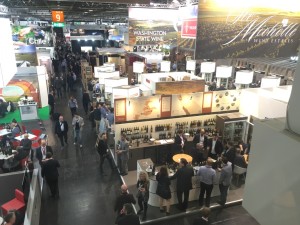
For those who don’t know, Prowein is the world’s leading trade fair for wine professionals, held each year in Düsseldorf, Germany. What does that means in terms of numbers? Well let’s quickly do the math. It lasts 3 days, 9 hours each day, and there are over 6,000 exhibitors from 57 countries. 3×9/6,000= an impossible number of booths to visit during the fair.
So where do you start? Most visitors are here to find business opportunities. They represent a distribution channel for the wine producers. They are importers, exporters, distributors, restaurants, etc. It’s a bit like a matchmaking service. I attended the fair as a student of International Wine Business/winery apprentice/blogger/curious, future-thinking wine professional in the making. I knew I had only one day at Prowein and that I needed to narrow down my plan of attack. Luckily, I know what I like in a wine region.
Tradition in wineries is important, but as the New World has shown, not necessary. I am most attracted to wines and wineries that don’t play by the rules of tradition. Of course inspiration and know-how can be drawn from, for example, the great French wine regions of Burgundy, Bordeaux, or the Loire, but New World wine regions such as Niagara, Okanagan, Oregon, and Washington State, can take that knowledge and run in whichever direction they choose. What best represents the terroir? Growing conditions? Grape varieties? And importantly, what unique message they want to project through their wine?
Like the core upon which the New World was founded, the wine scene there is freeing and makes space for creativity. Would you ever see a Chardonnay-Riesling blend in France? Non. Is Megalomaniac winery in Niagara making a fantastic one? Oui.
OH CANADA
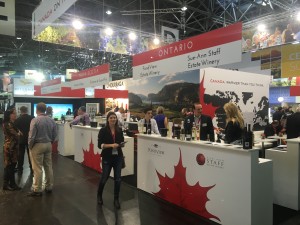
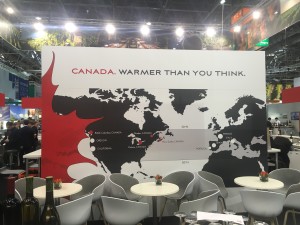
With my focus on the Americas, I was able to stay in one hall of the fair dedicated to the New World – U.S.A., New Zealand, South Africa, Brazil, Canada, Australia, etc. As a Canadian whose wine heart still resides in Canada, I beelined it for the Wines of Canada stand promptly as the doors opened. Here I met many fantastic Canadians making world class wine.
Winemaker and Vice President of Vineland Estates Winery, Ontario, Brian Schmidt, can tell you everything you need to know about his wine. Later in the day I would speak with a French importer of his wines, Justine Coudert from World Wines Hunter. (Side note: I need to find where these Canadian wines are hiding internationally so I can stop hoarding my Canadian treasures and start enjoying more of them.)
The Canadian Pavillion
Vigneron and Owner of Hidden Bench Vineyards and Winery in Beamsville, Ontario, Harald Thiel, spoke about his commitment to environmental stewardship and low-impact winemaking. As someone with a background in environmental sustainability, to me this is really fantastic.
Gilles Chevalier, President and Co-Managing partner at Domaine Queylus in St. Ann’s, Ontario proclaimed that when he and 14 or so partners decided to jump into wine making in 2006, it was better that he new nothing rather than a little about grape growing and winemaking. He focuses on the marketing and leaves the winemaking to Thomas Bachelder, 2009 winemaker of the year.
From the west coast of Canada, John W. Skinner, Owner of Painted Rock Estate Winery in Penticton, B.C. has his sights set on the international arena. He exports 55% of this wine already, and is setting himself apart by tearing down the image that Canadian wines can only be sold to a local audience.
In total there were 22 wineries from British Columbia, Ontario, and Nova Scotia represented at the Wines of Canada booth:
British Columbia:
Bench 1775 Winery, Okanagan Valley
Burrowing Owl Estate Winery, Okanagan Valley
C.C. Jentsch Cellars, Okanagan Valley
Church & State Wine, Okanagan Valley
Gold Hill Winery, Okanagan Valley
Okanagan Crush Pad, Okanagan Valley
Painted Rock Estate Winery, Okanagan Valley
Poplar Grove Winery, Okanagan Valley
Quails’ Gate Winery, Okanagan Valley
Wild Goose Vineyards, Okanagan Valley
Ontario:
Colio Estate Wines, Lake Erie North Shore
Flat Rock Cellars, Niagara Peninsula
Hidden Bench Vineyards, Niagara Peninsula
Lakeview Cellars, Niagara Peninsula
Pelee Island Winery, Lake Erie North Shore
Pillitteri Estates Winery, Niagara Peninsula
PondView Estate Winery, Niagara Peninsula
Domaine Queylus, Niagara Peninsula
Sue-Ann Staff Estate Winery, Niagara Peninsula
Vineland Estates Winery, Niagara Peninsula
Nova Scotia:
Benjamin Bridge, Gaspereau Valley
Domaine de Grand Pré, Annapolis Valley
I even found a Canadian wine enthusiast from the Netherlands named Jurgen van der Vlugt, owner of a small wine importing company Étoiles du Nord. One of the great joys in my life is educating those around me about the quality of wines coming out of Canada (and not just ice wine!). Jurgen seems to be championing this cause himself. A kindred spirit.
the best parts of wineland USA
Moving on to my favourite American wine region, Washington State, I met Sean P. Sullivan, Contributing Editor or the Wine Enthusiast and founder of the Washington Wine Report, as he presented a seminar on Washington and its wine. I learned that contrary to popular belief, not all of Washington is rain-cloud covered. What?! Yes, it’s true. The vineyards are positioned on the east side of the Cascade Mountain and in fact receive so little rain that they must irrigate. It’s a warm, dry, continental climate. Also, because the area is so large you get small microclimates throughout Washington’s growing regions. This gives “varietal tempicity”, in Sean Sullivan’s eloquent words. The sandy soil of the region also means that they do not suffer from phylloxera and therefore use the natural rootstock in lieu of grafting. Now that’s pretty darn cool.
Learning about Washington State wine
We tasted 2 wines – one white and one red. The first was a L’Ecole No 14 Columbia Valley 2014 Semillon-Sauvignon blend. It has hints of vanilla, tropical fruits such as pineapple and mango, citrus, and an oak influence. This is how I like my wine – interesting, complex, and mouthwatering – making me want to go for sip after sip while getting more and more out of it. The red was a Browne Family Vineyards Columbia Valley 2013 Cabernet Sauvignon. This showed blackberry, black cherry, and chocolate notes, as well as barrel toasting. These two next to each other are like ying and yang. Chocolate and vanilla. Delightful!
Charles Smith wine
I also tasted through some Charles Smith Wines. I love the labels almost as much as I love the wine! Big Syrahs, well balanced Merlots, acidic Rieslings. What more could you want? These brands are funk-tastic. I want to jump on a plane immediately and visit this winery.
Now go one state south and Oregon’s growing climate is starkly different from Washington’s. This is a wet, coastal maritime climate. One winery of particular note is Howard Rossbach’s Firesteed Cellars in the Willamette Valley. He has had this winery since 1992 and has been working in the wine business since 1972. To be honest, there is little reason for an owner of a winery to speak with me at this point in my career, let alone make me feel welcome. This man is a jewel and has a great spread of wines.
For fun I also tasted through some New York State wines. There were some interesting lightly oaked Chardonnays and, rather surprisingly, a Lemberger (Blaufrankisch). What the heck is that doing here?! I believe that good wine can be made just about anywhere given passionate vignerons and winemakers. Unfortunately, I don’t think this area has yet to attract enough talent to move forward and make wines that one would choose over another. It’s definitely an area I will keep my eye on as it develops though
A shout out to my Germany
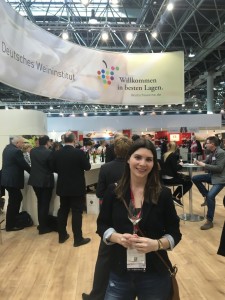
As most of my wine education thus far has been in Germany, I am familiar with, and naturally very interested in, further developing my German wine knowledge. Just as I feel at home at the Canadian and Washtingon State wine stands, Germany also feels welcoming. The Deutsches Weininstitut (German Wine Institute) was showing wines from all around Germany. They gave a tasting presentation of Schloss Vollrads and Robert Künstler wines. This informative seminar was meant to extend the efforts of the German Wine Institute in educating the world on Germany’s fantastic Riesling selections. As one who believes firmly in the greatness of German Rieslings, I hope the message got through to others and will be spread far and wide.
Honourable mention
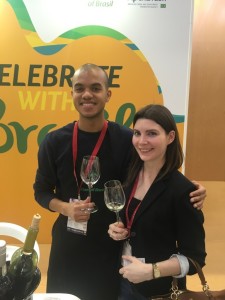
An honourable mention goes to Wines of Brazil. I know what you’re thinking. Brazil makes wine? I mean Portugal does, but have I ever seen a bottle of Brazilian wine? I’m pretty sure I haven’t. Luckily, one of my International Wine Business classmates is Brazilian and he showed me some of the Brazilian wines being poured at Prowein. Most important to note is that they make it sweet and they make it bubbly. That’s how they like it. Sweet style sparkling wines are very popular. And hey, if that is what you go in expecting – versus a French Champagne – you’d be quite pleasantly surprised. In fact, I also tried a champagne-style 50% Chardonnay and 50% Pinot Noir blend Extra Brut with 6g residual sugar and it was very lovely as well. There you go. Now you and I know that Brazil makes wine.
After eight hours at Prowein my feet were ready to call it quits. I hope that when I return next year it will be in an even more professional capacity. Either that or I’m just going to go next year for the free drinks. I kid, of course. Mostly, at least.
One of the first rules of grape growing is: struggle = reward. This is why artificially watering vines, even in times of drought, is generally disproved of (or illegal) in order to make sure the roots grow deep and strong and lead to more resilient vines. When it comes to the production of grape clusters, you want to aggressively prune branches in order to condense the available nutrients into each grape berry. Too many grapes fighting over limited nutrients a great wine does not make. You need to keep the quantity low and quality high.
In fact, quality designations in wine are partially derived from the amount of grapes picked from vineyards. Each country has it’s own regulation. For example, in France the AOC regulates the allowed yields. In Germany’s VDP classifications, the basic “classic” wines can be harvested at a yield of 100 hectare litres/ hectare; after that it drops drastically to 60hl/ha for all other succeeding “selection” quality designations. In addition to protecting the consumer by regulating quality, this also helps avoid more overproduction in an already saturated market.
In the first months of the new year, when the vines are dormant, you select which vine branches will be kept to produce that year’s grapes. Branches that are too new, or grow spontaneously from the bottom of the trunk, lack genetic information that tells them how to grow grapes. Keeping old vines means an unruly, unmanageable trellis with too many grapes and branches fighting for a limited energy supply.
How to Prune
Cane Pruned vs. Spur Pruned Vines
There exist two different methods to prune grape vines: cane pruning and spur pruning. The decision on pruning style depends on the quality of the branch-growths available, and then how you train the branches to grow (though certain pruning styles are more effective for certain grapes varieties).
First: Instructions on How to Prune
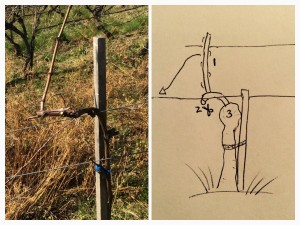
For cane pruned vines, as a basic rule of thumb, you count from 1 to 3 to understand which branches to keep and which to cut. 1=last year’s branch that will grow this year’s shoots and grapes; 2=branch from 2 years ago; and 3=the head – in old vines the gnarly looking nub that is connected by 2 or 3 years to the original trunk that gets larger and larger with pruning.
The “Head” of the Cane System
By cutting the 2-branch at the point just after the 1-branch, you are keeping the branch that will grow this year’s grapes as close to the trunk, and therefore energy supply, as possible. The 1-branch gets bent around the bottom metal trellis wire (like the 2-branch as seen in the photo below) and then grows new shoots up towards the sun and sprout grape clusters.
Officially speaking, for this year’s growth the 1-branch is called the cane, the 2-branch the arm, and the 3-branch the head.
The 1-2-3 Method of Cane Pruning
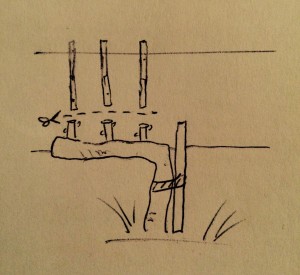
With spur pruning, a long, thick, semi-permanent branch called the cordon grows horizontal along the trellis wire from the trunk. From the cordon, spurs grow up and produce the grape shoots. With pruning, you are essentially giving dormant canes a hair cut and they are now called spurs. This method is simpler to understand and execute.
Spur Pruning a Cordon System
Learning Curve
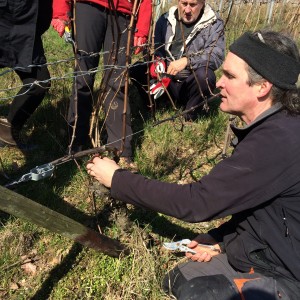
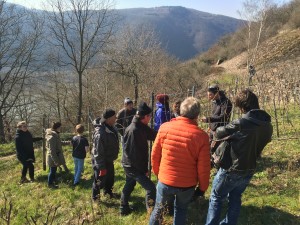
On Saturday, in sunny 7ºC weather, I, along with members of Garage Winery’s vine sponsorship community, met on the hills of Rüdesheim above the Rhein River to learn about pruning and try our hand at the process. It is quite upsetting to see such large pieces of healthy vines be cut. It takes some time to come to terms with the fact that the branches grow back during the season and that this truly is the best way to keep the grapes as healthy and flavour-packed as possible. After all, wines are the result of not only the wine making process, but of decisions made to the raw material in the vineyards. So go ahead and prune those vines. No pressure.
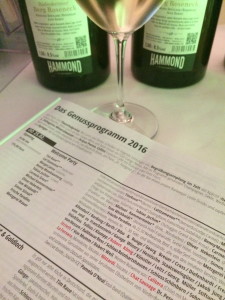
Thursday, February 25th, 2016: It’s opening night of the 20th annual Rheingau Gourmet & Wein Festival. 10 world class chefs have been flown in from around the world to prepare dishes, and 30 Rheingau wineries are set to pour their wine and sekt.
Top Chefs from Germany and Around the World & 30 Rheingau Wineries
Held within the Lay Brothers’ Dormitory of the historic Kloster Eberbach, the guests arrived dressed to impress. However, this was not the time to wear anything too restricting around the waist line. Guests wandered amongst the many food and wine booths looking to see what tickles their fancy. By the end of the night the goal is – or should be – to try everything. You are, after all, here to experience all the great food and wine on offer.
Plating for nearly 200 people
Anthony Hammond of Garage Winery and Hammond Wines in Oestrich Winkel kindly invited me to experience this event and help pour. We served magnums of his full-bodied, rich and crisp, semi-sweet 2009 Berg Roseneck Riesling Spätlese to guests, while at the same time indulging ourselves in the interesting food and wines available. Interestingly, some Germans still have an ingrained aversion to sweet rieslings. I think this harkens back to the prominent days of Liebfraumilch and other such once-high-quality-turned-low-quality sweet German wines that ravaged the globe, and to this day still (foolishly) represent German wines in many parts of the world. But with over 10 magnums poured in under 5 hours, this wine was a welcomed alternative to dry Rieslings provided by other wineries.
Winemaker Anthony Hammond and Myself
The Food: To start, I had the foie gras with black truffle vinaigrette, red beet essence, and brioche toast. This, as well as a goose liver mousse (served in an avant garde-esque gold-coloured egg), was the perfect accompaniment to the semi-sweet spätlese I was pouring at this event. Divine! Fatty and salty paired with the deep fruity sweetness. There was veal from Wiesbaden’s Michelin star restaurant, Die Ente, salmon cakes from Chef Benny Masekwameng from South Africa, many others, including a white chocolate-mango ganache from Kronenschlösschen, Hattenheim for dessert.
Foie Gras with Hammond’s 2009 Berg Roseneck Riesling Spätlese, and White Chocolate-Mango Ganache
The Wine: Some wines of particular note from this evening’s event include a 2007 Chardonnay brut Sekt from Bardong winery, with delightful notes of brioche; a 2014 Siegelsberg dry Riesling from Schloss Reinhartshausen, with super explosive, exciting fruitiness and acidity to balance; as well as a stellar Pinot Noir from Robert König winery.
A mere 24 hours later and I feel like Cinderella. Last night, stellar food from top star chefs; today, Domino’s pizza. Though to be honest, I do love me my pizza nearly as much as fancy food. Shhhhh…
Last month the German Wine Institute (Deutsches Weininstitut) based in Mainz presented to my International Wine Business class. This two-day seminar was first lead by Mr.Bretchi, Head of Education, and then Mr.Schindler, Head of Marketing. The German Wine Institute is Germany’s wine marketing organization, charged with promoting German wines domestically and internationally. You see, German wines have had a bad reputation since the rise in popularity of Liebfraumilch, a sticky sweet, once high-turned low quality, heavily exported wine-in-a-blue-bottle. Sweet, one note wines have thus become synonymous with German wines, leaving a lot of work for the German Wine Institute to restore a proper image of the nation’s wealth of world-class wines.
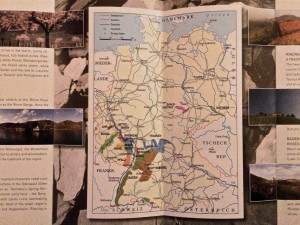
German Wine Growing Regions
In truth, Germany has a lot to offer the wine consumer. It is a cold grape growing climate, meaning that refreshing acids are nice and high, and alcohol is low. This style makes for absolutely perfect food pairing wine. It also has a long growing season, giving the grapes times to mature slowly and delicately, resulting in an increase in fruity flavour and aromas. The majority of vineyards are located on steep slopes along large rivers, meaning that the grapes grow in a warmer-than average, and naturally regulated micro-climate.
In total Germany is home to 100 white grape and 40 red varieties. Germany is the largest producer of Riesling in the world, and the third largest producer of Pinot Noir (Spätburgunder in German). German Pinot Noirs have unfortunately not been given the public accolades they rightly deserve. The market associates dark red wines with quality and flavour (think Bordeaux) and Germany produces a much lighter coloured product; delicious and worthy in it’s own respect. German wines also have an excellent price-quality ratio, at an average of 2.89 Euros/Litre. The quality level of German wines are so high due to the fact that Germany does not protect the sale of its own wines through import taxation (Germany has 0% tax on wine), and instead competes with the rest of the wine market on the value of quality.
Germany is the 15th largest wine producing country, with 102,000 hectares of vineyards, and the 4th largest wine market in the world. There are 13 wine-producing areas in the country, each with their own specialities and regional marketing activities. There are roughly 16,000 families owning vineyards. 1/3 of the wine produced comes from wine estates, 1/3 from coops, and 1/3 from bottlers who buy grapes and turn them into wine. In total Germany produces 9million hectare litres of wine, but is a thirsty nation and consumes about 20million hectare litres.
Tasting wines from various German wine regions
Unfortunately, due to the somewhat sullied image of German wines, combined with overwhelming labelling terminology (checkout this amazingly helpful page on how to read a German wine label), German wines have not risen as far as they should on the world stage. Wine gurus such as Robert Parker deliver top praise for the German high-quality sweet wines Trockenbeernauslese and Eiswein, but continue to over look Germany’s stellar dry wines.
The goal of the German Wine Institute is thus to show the world what German wines are made of. How do they do this?
The German Wine Institute is funded by wineries through the mandatory payment of 67 Euros/Hectare/Year. This gives them roughly 11million Euros per year to work with. They spend much of this money on marketing/advertising, but also make money through event and seminar hosting, product sales, etc.
Educational materials about German wines courtesy of the German Wine Institute
For the past number of years, marketing strategies have been mostly aimed at promoting Riesling. This has been what the German Wine Institute has based it’s image on. A fresh, fruity, dry, crisp, clean, classic, elegant, aromatic, food-pairing wine. And this is working. Initiatives such as Generation Riesling have been a huge success – making the image surrounding German wines more youthful and vibrant. The German Wine Institute also tries to expose the public to German wines through wine tourism activities, press releases/trips, events and fair, seminars and classes, educational materials, Riesling lounges in restaurants, social media, the German Wine Queen competition, some sponsorship, supermarket advertising, and agreements with foreign offices. This work is carried out both in the Mainz headquarters, as well as through their international offices. The German Wine Institute employs PR firms in a select number of cities around the world to promote the wonderful world of German wines.
Since moving to Germany in 2013, I have grown to think of Riesling as the most regal and well-rounded of grape varieties. German wines are not French or Italian or Chilean. They are unique. They represent the terroir they come from and the love and labour that goes into making them.
If I were you, I’d go right now and find myself a Riesling Spätlese trocken from the Rheingau or the Mosel region, chill it, pour a glass, and enjoy. Prost!
Winemaking may begin with the picking of the grapes in the vineyards, but when the picking is done it’s only the beginning of the work at the winery.
Last Load of Grapes for the Day Arriving
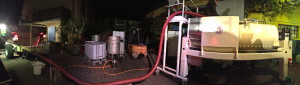
Loads of grapes arrive multiple times a day at the winery. Depending on what time of day the harvest took place, this could be in the wee early hours of the morning or well after dark in the evening. In some location and at some wineries, the grapes are picked during the night when the temperature is the coldest and therefore the grapes remain as stable and healthy as possible. At the winery I work at, we picked during the day and often the last load of grapes wouldn’t arrive to the winery until 9:00pm.
DeStemming
So the grapes have arrived. First things first: are you destemming? If you have machine-harvested the grapes, this has already been done by the machine. Bitter tasting phenols exist in the stems of grapes, and while this can sometimes be desired for red wines, it is avoided with white wines. So into the destemming machine the grapes go. This machine also slightly crushes the grapes, releasing some juice and turning the grapes into “mash”.
Destemming Machine
Macerating
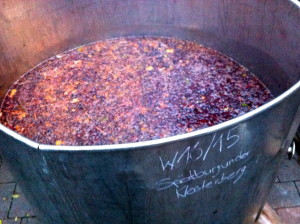
Next, are you macerating the grapes? Maceration is where the grapes (now in mash form) are left in containers to sit “on the skins”. This is particularly important with red wines, as the red colour, as well as flavours, aromas, and tannins, comes from the skins. If you were to press the grapes right away, you would lose these important characteristics.This red skin transfer can also be accomplished by heating the mash. Depending on how long the grapes were left to mingle with the skins, you can end up with a blanc de blanc, weissherbst, or rosé. With certain white grape varietals with very aromatic skins such as Sauvignon Blanc, maceration is also employed. Maceration can happen before, during, and/or after fermentation, depending on the desired outcome. As the mash begins to ferment, the CO2 pushes the grape skins to the top of the container. This can form as cake-like hard layer on the top. Since the point is skin-contact, the wine-maker must “punch” the grapes skins down to mix them.
Pinot Noir Macerating
pressing
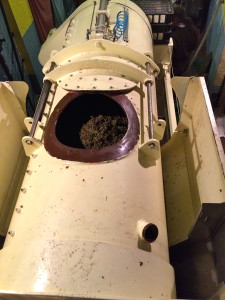
The next action is to press the grapes (or mash in the case of destemmed or macerated grapes). There are a few different types of pressing machines, however most these days work by applying pneumatic pressure to a ballon inside the machine’s vat and forcing the grapes up against the sides of the vat. The juice then flows out through screens and channels and if pumped into a tank.
Pressing Machine
clarifying
Ta-da! You have grape juice (now referred to as “must”)! With white wines, before fermentation can occur you need to remove the floating suspended matter in order to turn the natural grey-coloured mash into the crystal clear liquid we expect. Bentonite, charcoal, Kieselgel, Flora Clair, sulfuric acid, and other clarifying products preform this duty. They attract the suspended participles and pull them down to the bottom of the tank. For more information on the clarification process, you can refer to my Clarification blog post.
Clarifying Products
The next step is adding the yeast to begin fermentation and separating the sunken particles from the clarified must. To make this separation, the wine is pumped into a different tank, making sure not to transfer the bottom of the tank containing the settled particles. A second pressing can also occur using the juice from the bottom of the tank mixed with soluble cotton, making sure to squeeze every last drop of grape juice from the clarifying agents and sunken particles. This lower-quality juice is often kept separate from the main juice.
Pressed Must + Clarifying Agents + Settled Particles + Soluble Cotton = Ready for Second Pressing
Fermenting
Fermentation is the process by which yeast eats the sugars in the grape juice and convert the sugars into alcohol and CO2. Either you are kicking it back old school and allowing the naturally occurring yeast on the grape skins and in the air at the winery to ferment your wine, or you are adding a known yeast strain that will optimize the rate of fermentation. If adding yeast, you mix the yeast with warm water, wait for it to activate (as seen in the photo below), and then add it to your must. Fermentation generally starts quickly, but should slow down and continue for a couple weeks losing less and less sugar everyday. If fermentation continues too quickly you can lose a lot of aromas. When the alcohol content of the wine reaches about 15 percent, the yeast dies. You can also stop the fermentation process yourself before the yeast has finished eating (thus leaving residual sugars) by cooling the wine down and/or adding sulfur. These decisions are up to the winemaker.
Yeast Getting Into Action Before Being Added to the Must
Carbonic maceration is another fermentation option that is used to create really fruity wines such as Beaujolais. In this case the entire grape bunches are put in tanks without being punctured and without yeast being added. Fermentation then occurs within each berry separately and the natural weight of the grape bunches and gravity press the grapes.
chaptalizing & de-acidifying
Further decision the winemaker must make are whether or not to chaptalize or de-acidify the wine. Chaptalization is the process of adding sugar to the wine (before or during fermentation) to increase the alcohol content of the wine. *This does not increase the residual sugars in the wine.* Chaptalization is done in northern wine growing regions/countries such as Germany who don’t get enough sunshine and therefore have grapes with low-sugar. Not enough natural sugar = too low alcohol percentage in the final product. This is not allowed in every country, or with all quality levels of wines. In Germany, if a wine has the acid and sugar levels to qualify as a Grosse Gewachs (equivalent to “Premier Cru”), you are not allowed to chaptalize or de-acidify.
Adding Sugar
Another outcome of grapes grown in northern climates such as Germany is high acid contents. Not enough sun means that the sugars don’t develop enough and the juices pressed from these grapes have much too high acid levels. High acid content is more palatable (and to an extent sought after) in certain white wines, such as Riesling. High acids in red wines are avoided as it exaggerates astringency. De-acidifying is the process of adding certain chemicals to remove the acid. The options are to use 2 different salt compounds: calcium carbonate and/or potassium hydrogencarbonate; or malolactic fermentation. Malolactic fermentation is the process by which harsh malic acid is transformed into soft lactic acid. De-acidification should occur prior to fermentation in order to maintain harmonious aroma compounds.
Measuring & Tasting
Cellar tastings are an important aspect of the wine-making process. Faults in the wine can be discovered and rectified. Aging and cuvée decisions can be made. Frequent measurements of the wine tells you when fermentation has stopped (and whether you need to try and re-start it or or not) by analyzing the remaining sugar levels. Newly fermenting wines have their own unique aromas and flavours; nothing but a hint of the finished product exists. The fresh fermenting wines taste more like grape juice, with flavours of juicy, sweet fresh fruits such as pineapples and peach. Now you have a cellar full of wines-in-the-making, the fruits of the harvest labour.





 2014: Smooth, fading flint, very tart, wet rock, faint fruit – hints of banana and barely ripe peach.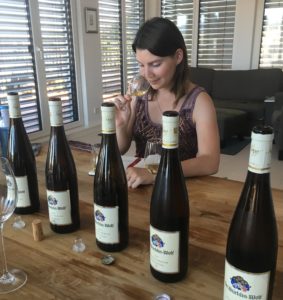







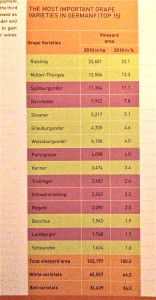 In total Germany is home to 100 white grape and 40 red varieties. Germany is the largest producer of Riesling in the world, and the third largest producer of Pinot Noir (Spätburgunder in German). German Pinot Noirs have unfortunately not been given the public accolades they rightly deserve. The market associates dark red wines with quality and flavour (think Bordeaux) and Germany produces a much lighter coloured product; delicious and worthy in it’s own respect. German wines also have an excellent price-quality ratio, at an average of 2.89 Euros/Litre. The quality level of German wines are so high due to the fact that Germany does not protect the sale of its own wines through import taxation (Germany has 0% tax on wine), and instead competes with the rest of the wine market on the value of quality.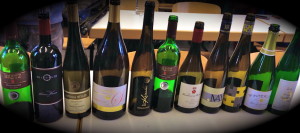





 heatheruncorked.com