Rheingau Gourmet & Wein Festival

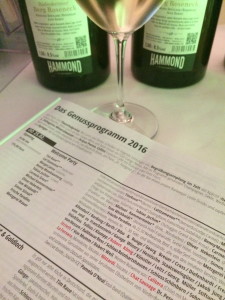
Thursday, February 25th, 2016: It’s opening night of the 20th annual Rheingau Gourmet & Wein Festival. 10 world class chefs have been flown in from around the world to prepare dishes, and 30 Rheingau wineries are set to pour their wine and sekt.

IMG_3077-225x300

Top Chefs from Germany and Around the World & 30 Rheingau Wineries

Held within the Lay Brothers’ Dormitory of the historic Kloster Eberbach, the guests arrived dressed to impress. However, this was not the time to wear anything too restricting around the waist line. Guests wandered amongst the many food and wine booths looking to see what tickles their fancy. By the end of the night the goal is – or should be – to try everything. You are, after all, here to experience all the great food and wine on offer.

IMG_3052-e1456516813527-287x300

Plating for nearly 200 people

Anthony Hammond of Garage Winery and Hammond Wines in Oestrich Winkel kindly invited me to experience this event and help pour. We served magnums of his full-bodied, rich and crisp, semi-sweet 2009 Berg Roseneck Riesling Spätlese to guests, while at the same time indulging ourselves in the interesting food and wines available. Interestingly, some Germans still have an ingrained aversion to sweet rieslings. I think this harkens back to the prominent days of Liebfraumilch and other such once-high-quality-turned-low-quality sweet German wines that ravaged the globe, and to this day still (foolishly) represent German wines in many parts of the world. But with over 10 magnums poured in under 5 hours, this wine was a welcomed alternative to dry Rieslings provided by other wineries.

FullSizeRender-1-290x300

Winemaker Anthony Hammond and Myself

The Food: To start, I had the foie gras with black truffle vinaigrette, red beet essence, and brioche toast. This, as well as a goose liver mousse (served in an avant garde-esque gold-coloured egg), was the perfect accompaniment to the semi-sweet spätlese I was pouring at this event. Divine! Fatty and salty paired with the deep fruity sweetness. There was veal from Wiesbaden’s Michelin star restaurant, Die Ente, salmon cakes from Chef Benny Masekwameng from South Africa, many others, including a white chocolate-mango ganache from Kronenschlösschen, Hattenheim for dessert.

image-24-300x225

Foie Gras with Hammond’s 2009 Berg Roseneck Riesling Spätlese, and White Chocolate-Mango Ganache

The Wine: Some wines of particular note from this evening’s event include a 2007 Chardonnay brut Sekt from Bardong winery, with delightful notes of brioche; a 2014 Siegelsberg dry Riesling from Schloss Reinhartshausen, with super explosive, exciting fruitiness and acidity to balance; as well as a stellar Pinot Noir from Robert König winery.

A mere 24 hours later and I feel like Cinderella. Last night, stellar food from top star chefs; today, Domino’s pizza. Though to be honest, I do love me my pizza nearly as much as fancy food. Shhhhh…

Merlot Tasting

Wine is wine is wine – said no wine aficionado ever. There are expectations in each bottle of wine. From blends like Bordeaux, where wine from the right bank is distinctly different from the left bank, to varietal wines, that is wine made from one single type of grape, understanding the wine’s profile is both a wine enthusiast’s hobby, and a sommelier’s profession.

Trying to understand these characteristics in wine can be difficult. These are the typical, inherent aromas, flavours, body, etc. that you expect from a particular grape variety. What with so many options to choose from – from different price points to different countries- and there being only so many days in the week to try them all – sometimes you just have to buy a wide range and make your own tasting.

IMG_2949-300x300

The homework for today: Merlot.

My plan is to continue these explorations into wine profiles using only wines I can find for an average of 5€. The Canadian in me screams “this is impossible!”, but the German resident (and Wine Business student) in me knows that the average retail price for imported wines as of 2010 was 2.27€/L. So the quality might not be the best of the best, but I can find wines from the old and new world and use this experience to increase my knowledge on wine profiles.

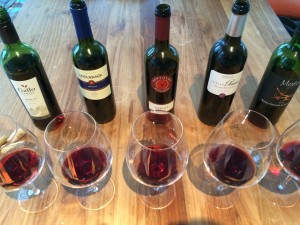
The Merlot’s up to bat today include:

Gallo 2014, California: 4.99€
Undurraga 2013, Chile: 5.99€
Bertoldi Rotondo 2013, Italy: 3.99€
Chateau Penin Grand Sélection 2010, Bordeaux (found this one in the house, but retails for about 10€)
Baron Philippe de Rothschild 2014, Pays D’Oc: 3.79€


IMG_2948-300x225

The verdict? As expected, the warmer climate grown grapes presented with much stronger blueberry/blackberries and vanilla aromas and flavours, with the California Merlot striking an in-your-face blow. Too much so in my opinion. The Chilean was a little subtler and more balanced with cedar, raspberry, and plum flavours, in addition to blueberry and vanilla. The Italian was the lightest in colour, had the lowest alcohol content in the tasting at 12%, and tasted more of sour red current, cherry, raspberry, and herbs. The two French wines differ noticeably, though the age and quality may have played a difference. The Bordeaux was juicier and slightly fruitier than the Pays D’Oc, while the Pays D’Oc was more herbaceous.

Merlot may not be my wine of choice, but through practice (yay wine tasting!) I will be better able to identify Merlots in the future. Practice makes perfect!

‘Tis the Season for Bubbly!

Hello there! Today is December 31st and I can’t help but write a post about sparkling wine. I recently tried my Muller-Thurgau Sekt, and let me tell you – it is turning out quite nice! It is still sur lie (that is – the dead yeast is still in the bottle), but in a few months I will riddle the wine, disgorge the yeast, decide on dosage, and cork it.

Dosage – the process of choosing the level of dryness (a.k.a how much residual sugar) – is something that I was lucky enough to be personally involved in last month. When you release the yeast (disgorge), a small amount of the wine is lost. This is the time when you decide how much reserve wine to add to fill the bottle back up. The additional liquid can have a high amount of sweetness, or next to nothing.

This is how you end up with a myriad of sparkling wine types to choose from in the stores:

Doux (sweet: 50+ g/l residual sugar)
Demi-sec (half-dry: 32-50 g/l residual sugar)
Sec (dry: 17-32 g/l residual sugar)
Extra sec (extra dry: 12-17 g/l residual sugar)
Brut (very dry-dry: 0-12 g/l residual sugar)
Extra brut (very dry: 0-6 g/l residual sugar)
Brut nature (bone dry: 0-3 g/l residual sugar)


doux - demi-sec - sec - extra-sec - brut - extra brut - brut nature

The Sekt I was helping to choose the dosage for is a delicious, full bodied, unusual, exciting Pinot mix. That is to say it combines Pinot Noir, Pinot Blanc, and Pinot Auxerrois. Super tasty! The options we tasted had a residual sugar level of 3, 4, 5, and 7g/l, respectively. IMG_2355-300x225

Two of the Dosage Options Tasted

In the end we decided on the lowest residual sugar level tasted – 3g/l. There was a short discussion over the public’s preference for a little sweeter sparkling wine, but in the end, our taste buds won-out and the driest dosage was chosen. The wine maker’s choice!

Now tonight I am sipping on this perfectly lovely STILL UNLABELLED (how fancy!) Sekt that I had a hand in making. I think this bubbly will pair very nicely with friends, family, and fireworks tonight.

sekt-nye-225x300

Happy New Year!

Spreading the Deliciously Crisp Word – Germany & German Wine

Last month the German Wine Institute (Deutsches Weininstitut) based in Mainz presented to my International Wine Business class. This two-day seminar was first lead by Mr.Bretchi, Head of Education, and then Mr.Schindler, Head of Marketing. The German Wine Institute is Germany’s wine marketing organization, charged with promoting German wines domestically and internationally. You see, German wines have had a bad reputation since the rise in popularity of Liebfraumilch, a sticky sweet, once high-turned low quality, heavily exported wine-in-a-blue-bottle. Sweet, one note wines have thus become synonymous with German wines, leaving a lot of work for the German Wine Institute to restore a proper image of the nation’s wealth of world-class wines.

IMG_2533-300x225

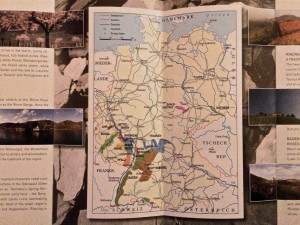
German Wine Growing Regions

In truth, Germany has a lot to offer the wine consumer. It is a cold grape growing climate, meaning that refreshing acids are nice and high, and alcohol is low. This style makes for absolutely perfect food pairing wine. It also has a long growing season, giving the grapes times to mature slowly and delicately, resulting in an increase in fruity flavour and aromas. The majority of vineyards are located on steep slopes along large rivers, meaning that the grapes grow in a warmer-than average, and naturally regulated micro-climate.

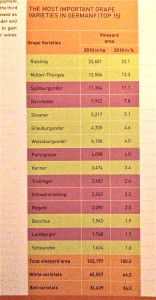
IMG_2532-156x300In total Germany is home to 100 white grape and 40 red varieties. Germany is the largest producer of Riesling in the world, and the third largest producer of Pinot Noir (Spätburgunder in German). German Pinot Noirs have unfortunately not been given the public accolades they rightly deserve. The market associates dark red wines with quality and flavour (think Bordeaux) and Germany produces a much lighter coloured product; delicious and worthy in it’s own respect. German wines also have an excellent price-quality ratio, at an average of 2.89 Euros/Litre. The quality level of German wines are so high due to the fact that Germany does not protect the sale of its own wines through import taxation (Germany has 0% tax on wine), and instead competes with the rest of the wine market on the value of quality.

Germany is the 15th largest wine producing country, with 102,000 hectares of vineyards, and the 4th largest wine market in the world. There are 13 wine-producing areas in the country, each with their own specialities and regional marketing activities. There are roughly 16,000 families owning vineyards. 1/3 of the wine produced comes from wine estates, 1/3 from coops, and 1/3 from bottlers who buy grapes and turn them into wine. In total Germany produces 9million hectare litres of wine, but is a thirsty nation and consumes about 20million hectare litres.

IMG_2451-300x133

Tasting wines from various German wine regions

Unfortunately, due to the somewhat sullied image of German wines, combined with overwhelming labelling terminology (checkout this amazingly helpful page on how to read a German wine label), German wines have not risen as far as they should on the world stage. Wine gurus such as Robert Parker deliver top praise for the German high-quality sweet wines Trockenbeernauslese and Eiswein, but continue to over look Germany’s stellar dry wines.

The goal of the German Wine Institute is thus to show the world what German wines are made of. How do they do this?

The German Wine Institute is funded by wineries through the mandatory payment of 67 Euros/Hectare/Year. This gives them roughly 11million Euros per year to work with. They spend much of this money on marketing/advertising, but also make money through event and seminar hosting, product sales, etc.

IMG_2452-300x225

Educational materials about German wines courtesy of the German Wine Institute

For the past number of years, marketing strategies have been mostly aimed at promoting Riesling. This has been what the German Wine Institute has based it’s image on. A fresh, fruity, dry, crisp, clean, classic, elegant, aromatic, food-pairing wine. And this is working. Initiatives such as Generation Riesling have been a huge success – making the image surrounding German wines more youthful and vibrant. The German Wine Institute also tries to expose the public to German wines through wine tourism activities, press releases/trips, events and fair, seminars and classes, educational materials, Riesling lounges in restaurants, social media, the German Wine Queen competition, some sponsorship, supermarket advertising, and agreements with foreign offices. This work is carried out both in the Mainz headquarters, as well as through their international offices. The German Wine Institute employs PR firms in a select number of cities around the world to promote the wonderful world of German wines.

Since moving to Germany in 2013, I have grown to think of Riesling as the most regal and well-rounded of grape varieties. German wines are not French or Italian or Chilean. They are unique. They represent the terroir they come from and the love and labour that goes into making them.

If I were you, I’d go right now and find myself a Riesling Spätlese trocken from the Rheingau or the Mosel region, chill it, pour a glass, and enjoy. Prost!

Pinot Noir – Rheingau Tasting

Pinot Noir (or Spätburgunder as it is known in German) is Germany’s most important red grape variety. Germany is also the third largest producer of Pinot Noir internationally.

For anyone who has seen Sideways knows, Pinot Noir is delicate and subtle, needing great wine makers and grape growers to make them spectacular. They are finicky and disease prone, and lighter in body and colour than most all other red wines. This wine is deceptively complex, exemplifies the unique characteristics of the terroir, and is easy to pair with so many foods.

IMG_2369-225x300

“Ruby Red Symphony”

On October 31st, this Pinot Noir tasting event held in the wine cellar at Georg Breuer Winery in Rüdesheim brought together 18 Pinot Noir producers from the Rheingau region for a day of “ruby red symphony”, as the event name in German translates.

In attendance were the following wineries:

  • Fritz Allendorf
  • Walter Altenkirch
  • Bischöfliches
  • Georg Bruer
  • Chat Sauvage
  • Diefenhardt’sches
  • Goldatzel
  • Hessich State Winery from domain Assmannshausen
  • August Kessler
  • Klaus König
  • Robert König
  • Krone – Assmannshausen
  • Künstler
  • Hans Lang
  • Laquai
  • Gerog Müller
  • G.H. Von Mum
  • Thilo Strieth

From fresh and fruity to smoky and bold; from sparkling wine to blanc de noir still wine style; this tasting event had something for everyone. With a 25 Euros per person entry fee however, the price was a bit steep. But the opportunity to sample great Pinot Noirs from the Rheingau made it worth it.

IMG_2367-225x300

Sour Cherries, Cassis, Raspberries, Licorice, Oak…

My top pick of the day in the rosé category goes to the 2014 Weiβherbst from Gerog Breuer, with dynamic notes of pear, licorice and lemon.

In the bubbly category, the winner is the non-vintage red sekt brut from Hans Lang Winery, a nice and dry sparkling wine with notes of cassis and raspberries.

For good old Pinot Noir wine, the first prize goes to Diefenhardt’sches Winery’s 2014 WILDSAU GG Spätburgunder trocken, with 18 month in oak, lots of bright, balancing pizzaz to go with the dark and brooding smoky complexity.

The lesson of the day is to go out and find yourself a German Pinot Noir to try. They come in many different styles, so find the one that suits you best.

Harvesting – In the Cellar

Winemaking may begin with the picking of the grapes in the vineyards, but when the picking is done it’s only the beginning of the work at the winery.
IMG_2277-300x85

Last Load of Grapes for the Day Arriving

Loads of grapes arrive multiple times a day at the winery. Depending on what time of day the harvest took place, this could be in the wee early hours of the morning or well after dark in the evening. In some location and at some wineries, the grapes are picked during the night when the temperature is the coldest and therefore the grapes remain as stable and healthy as possible. At the winery I work at, we picked during the day and often the last load of grapes wouldn’t arrive to the winery until 9:00pm.

DeStemming

So the grapes have arrived. First things first: are you destemming? If you have machine-harvested the grapes, this has already been done by the machine. Bitter tasting phenols exist in the stems of grapes, and while this can sometimes be desired for red wines, it is avoided with white wines. So into the destemming machine the grapes go. This machine also slightly crushes the grapes, releasing some juice and turning the grapes into “mash”.

IMG_4961-221x300
Destemming Machine

Macerating

Next, are you macerating the grapes? Maceration is where the grapes (now in mash form) are left in containers to sit “on the skins”. This is particularly important with red wines, as the red colour, as well as flavours, aromas, and tannins, comes from the skins. If you were to press the grapes right away, you would lose these important characteristics.This red skin transfer can also be accomplished by heating the mash. Depending on how long the grapes were left to mingle with the skins, you can end up with a blanc de blanc, weissherbst, or rosé. With certain white grape varietals with very aromatic skins such as Sauvignon Blanc, maceration is also employed. Maceration can happen before, during, and/or after fermentation, depending on the desired outcome. As the mash begins to ferment, the CO2 pushes the grape skins to the top of the container. This can form as cake-like hard layer on the top. Since the point is skin-contact, the wine-maker must “punch” the grapes skins down to mix them.
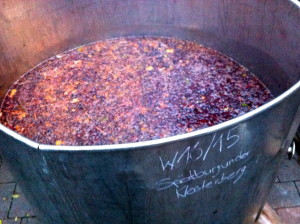
IMG_4974-300x224

Pinot Noir Macerating

pressing

The next action is to press the grapes (or mash in the case of destemmed or macerated grapes). There are a few different types of pressing machines, however most these days work by applying pneumatic pressure to a ballon inside the machine’s vat and forcing the grapes up against the sides of the vat. The juice then flows out through screens and channels and if pumped into a tank.
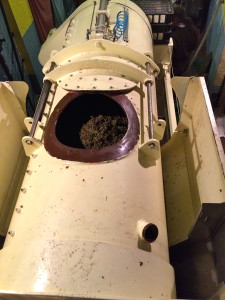
IMG_2278-225x300

Pressing Machine

clarifying

Ta-da! You have grape juice (now referred to as “must”)! With white wines, before fermentation can occur you need to remove the floating suspended matter in order to turn the natural grey-coloured mash into the crystal clear liquid we expect. Bentonite, charcoal, Kieselgel, Flora Clair, sulfuric acid, and other clarifying products preform this duty. They attract the suspended participles and pull them down to the bottom of the tank. For more information on the clarification process, you can refer to my Clarification blog post.

Screen-shot-2015-09-01-at-10.39.30-PM-300x140

Clarifying Products

The next step is adding the yeast to begin fermentation and separating the sunken particles from the clarified must. To make this separation, the wine is pumped into a different tank, making sure not to transfer the bottom of the tank containing the settled particles. A second pressing can also occur using the juice from the bottom of the tank mixed with soluble cotton, making sure to squeeze every last drop of grape juice from the clarifying agents and sunken particles. This lower-quality juice is often kept separate from the main juice.
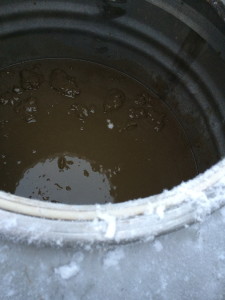
IMG_2334-225x300

Pressed Must + Clarifying Agents + Settled Particles + Soluble Cotton = Ready for Second Pressing

Fermenting

Fermentation is the process by which yeast eats the sugars in the grape juice and convert the sugars into alcohol and CO2. Either you are kicking it back old school and allowing the naturally occurring yeast on the grape skins and in the air at the winery to ferment your wine, or you are adding a known yeast strain that will optimize the rate of fermentation. If adding yeast, you mix the yeast with warm water, wait for it to activate (as seen in the photo below), and then add it to your must. Fermentation generally starts quickly, but should slow down and continue for a couple weeks losing less and less sugar everyday. If fermentation continues too quickly you can lose a lot of aromas. When the alcohol content of the wine reaches about 15 percent, the yeast dies. You can also stop the fermentation process yourself before the yeast has finished eating (thus leaving residual sugars) by cooling the wine down and/or adding sulfur. These decisions are up to the winemaker.
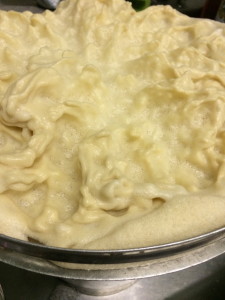
IMG_2283-225x300

Yeast Getting Into Action Before Being Added to the Must

Carbonic maceration is another fermentation option that is used to create really fruity wines such as Beaujolais. In this case the entire grape bunches are put in tanks without being punctured and without yeast being added. Fermentation then occurs within each berry separately and the natural weight of the grape bunches and gravity press the grapes.

chaptalizing & de-acidifying

Further decision the winemaker must make are whether or not to chaptalize or de-acidify the wine. Chaptalization is the process of adding sugar to the wine (before or during fermentation) to increase the alcohol content of the wine. *This does not increase the residual sugars in the wine.* Chaptalization is done in northern wine growing regions/countries such as Germany who don’t get enough sunshine and therefore have grapes with low-sugar. Not enough natural sugar = too low alcohol percentage in the final product. This is not allowed in every country, or with all quality levels of wines. In Germany, if a wine has the acid and sugar levels to qualify as a Grosse Gewachs (equivalent to “Premier Cru”), you are not allowed to chaptalize or de-acidify.

IMG_23271-225x300

Adding Sugar

Another outcome of grapes grown in northern climates such as Germany is high acid contents. Not enough sun means that the sugars don’t develop enough and the juices pressed from these grapes have much too high acid levels. High acid content is more palatable (and to an extent sought after) in certain white wines, such as Riesling. High acids in red wines are avoided as it exaggerates astringency. De-acidifying is the process of adding certain chemicals to remove the acid. The options are to use 2 different salt compounds: calcium carbonate and/or potassium hydrogencarbonate; or malolactic fermentation. Malolactic fermentation is the process by which harsh malic acid is transformed into soft lactic acid. De-acidification should occur prior to fermentation in order to maintain harmonious aroma compounds.

Measuring & Tasting

Cellar tastings are an important aspect of the wine-making process. Faults in the wine can be discovered and rectified. Aging and cuvée decisions can be made. Frequent measurements of the wine tells you when fermentation has stopped (and whether you need to try and re-start it or or not) by analyzing the remaining sugar levels. Newly fermenting wines have their own unique aromas and flavours; nothing but a hint of the finished product exists. The fresh fermenting wines taste more like grape juice, with flavours of juicy, sweet fresh fruits such as pineapples and peach. Now you have a cellar full of wines-in-the-making, the fruits of the harvest labour.

IMG_4956-300x224

Cellar Tasting

Harvesting – In the Vineyards

YES! The 2015 harvest has come and gone! Sugar and acid levels were triple checked. The tanks and buckets and hoses all cleaned. The press and destemer were installed. And the wine makers had formulated a plan for which vineyards to harvest first, and which ones to do by hand versus machine harvest.

Machine Harvest

In the case of this year’s harvest, the first few vineyards to be picked were on flat terrain, ideal for employing the machine harvest method. Sure, there is a romantic idea of hand picking, but when costs and time are compared, hiring a machine to do the work makes sense.

This machine works by alining itself (manually-driven, but also somewhat automated) with a row and straddling the trellis so that both the sides of the same row go through the machine’s mechanisms. By shaking the vines using oscillating rods, this machine pops the berries right off from the stems! They are caught as they drop, then ride along a conveyor belt on the machine through a screening process to filter out any debris.

Shake, shake, shake

I was able to ride inside one of these grape-picking machines and ask the driver some questions. What I found out is that during the harvest season these picking machine drivers work around the clock. 14 hours a day. They are in demand because not every winery owns this specialized machine. And when the grapes are ready to be picked, the winemakers need the machine pronto.

“The Grapeliner”

I also discovered that the wrong vines do on occasion get picked. Many of the rows have no obvious indication of who owns them, and many of the same grape varieties are planted by different wineries. So what happens then? If it is caught it time, there is no real harm done. Otherwise, if the winemaker has a sense of humour, a deal is reached. Everyone knows everyone around here and everyone must work together.

Hand Harvest

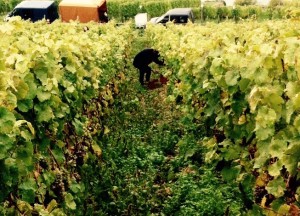
But not all vineyards are on flat ground. In the Rheingau, the most prized wines come the very steep slopes along the Rhein river. At this time students are called in to help with the hand harvest. Some assemble at the winery at 8:00am to get driven to the vineyard. Others who know the location drive themselves. It is the beginning of October but there is a bit of a cold spell and a moderate amount of rain is predicted.

image2-300x216

Quasimodo?

Let me tell you. Working on these steep slopes is HARD WORK. Even in the best-case senario where you have all pristine, perfect grapes and can just move along the vines cutting them off at lightening speed, you are still spending hour after hour hunched over on a 40 degree angle and moving heavy buckets as you go. Mentally, the work can be relaxing, since all your thoughts are focused on these berries. In the worst case situation, you have grape bunches with a mix of healthy grapes, noble rot, vinegar, oidium, and a host of other grape diseases all on the same bunch. This is particular slow and labour-intensive work. You cut one bunch off, scrap off the diseased parts, cut the noble rot grapes off into one bucket, place the remaining healthy grapes in another bucket, repeat. Grape bunch after grape bunch. This is mind numbing. This is also how some of the best sweet wines are made. By taking the time to let the grapes develop the nobel rot Botrytis, and then spending the efforts to separate them out from the normal good and and the just plain bad berries, you get a wine that is really high is residual sugars (think Auslese or late harvest) and sells for a lot of money.

Separating the berries

To ease the pain of this backbreaking work, food and drinks are provided by the employer. On a nice day, sitting down in the middle of the vineyards for a snack and looking out over the beautiful landscape almost makes you forget how many more rows of picking are ahead of you.

image22-300x225

Enjoy the view!

Cleaning versus Sterilizing

It may come as a surprise, but every corner of a winery does not have to be in sparkling, lemon-fresh, antibacterial condition. Yes, the wine industry is part of the highly regulated food and beverage industry; no we still do not have to wear hair nets.

Now, we are talking within reason. Wineries take measures to keep the majority of fruit flies out of the tanks, and bathroom brushes are certainly not swapped out for cellar brushes even in a pinch. But think about it. Ancient wine presses and cellars existed on open dirt floors, with spiders and people walking freely among the barrels. Some wineries haven’t strayed too far from this tradition, and it’s just fine. Note: the more controlled the environment, the more predictable the wines. For better or worse.

The reason why much of the time wineries do not have to take defence against the living world around it is because of clarifying and filtration methods. For example, the sulfur added to wine after fermentation will knock any unwanted residents out cold. And the final filtration before bottling is so precise and sterile that nothing should be able to get through.

So when is a good rinse down enough, and when is sterilization required? Lets look at some equipment and explore how they are treated.

Tanks: When the must or wine will only remain in the tanks for a short period of time (for example: between picking and pressing), a good rinse and scrub down is sufficient. However, when the wine will remain the tanks for a long period of time (for example; during fermentation or aging), the tanks need to be sterilized. When possible, climbing inside the tanks to first rinse and scrub them is helpful. Then steaming them for 20 minutes at no less than 120 degrees Celsius makes sure they are sterile.

A good interior scrub down and steam bath

Oak Barrels: Barrels need a higher degree of care to maintain. You can’t always get inside these barrels to scrub, but the standard 20 minutes of steam at 120 degrees will kill off everything. To sterilize and preserve the wood further, a sulphur smoke is released into the barrels for 15 minutes. When not in use, the barrels are also filled with a mixture of citric acid, sulfur, and water.

Steam followed by smoke is best for wood

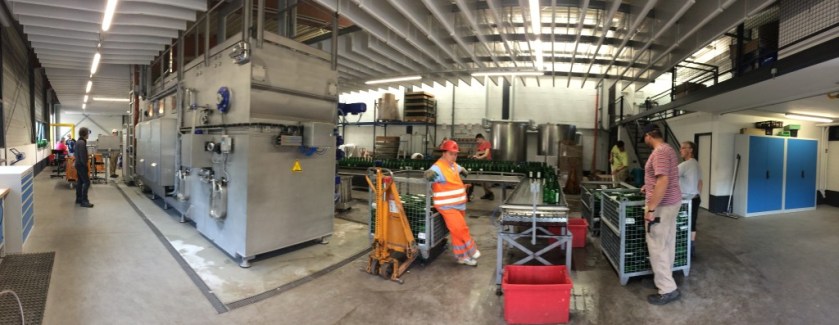
Bottles: I was lucky enough to be able to visit the local wine bottle-sterilizing factory. What makes it unique is that it employs people with mental disabilities. The machine used is new, and is incredibly energy and water-efficient. This factory uses high-level cleaning equipment to remove labels and get left-over junk out of the bottles. It is still high-temperature steam that does the sterilizing. At the winery, immediately before bottling, a sulfur spray can also be used on already clean bottles to just ensure a sterile environment for the newly bottled wine.

IMG_1817-1024x397

Local bottle-cleaning factory

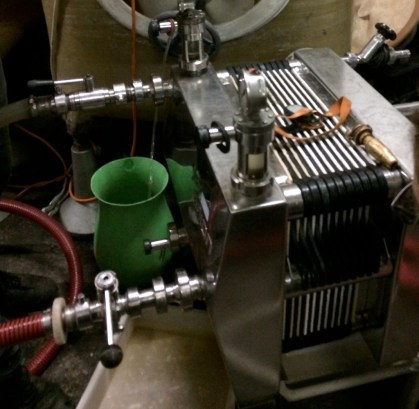
Filters: Before used for filtering, these machines need to be steamed, as the wine passing through needs to remain sterilized from the tank to the bottle. To do this, you run the 120 degree water though the tank from the fine side to the large side of the filter papers. Afterwards, you run cold water through from large to fine side to flush out any paper flavours.

IMG_1850-e1445934431613-1024x1001

Don’t forget to sanitize the filter!

These are just some examples. Many other pieces of equipment, such as hoses, also need to be clean or sterile – depending on the function.

The thing to remember is that wine making can be messy work. But do you taste it in the bottle? Well, you shouldn’t. Wine is like children. Most of the time they are running around and getting dirty, but when it matters, they comb their hair and sit up straight and smile for their school photo.

Bottling

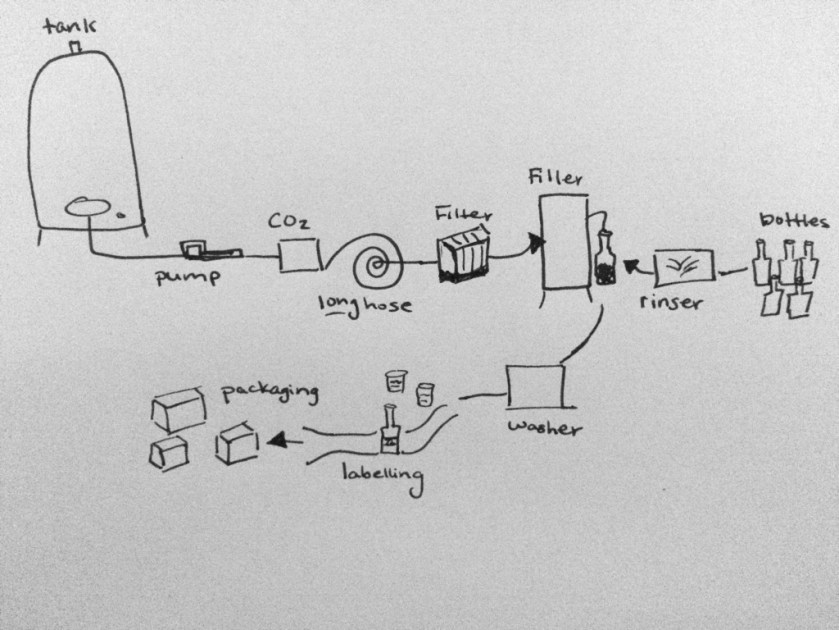
When it comes to the arrangement of machines and stations needed to finally bottle wine, I can’t help thinking of the “Skeleton Dance” song that goes – “The leg bone’s connected to the knee bone. The knee bone’s connected to the thigh bone…”

IMG_2307-1024x768
The bottling process

In short, when the wine is ready to be bottled, it is tested one last time for any errors, pumped from the cellar, through the last and sterile filtration, into the bottling machine, where sterilized bottles are filled, capped, and ready to be labeled and packaged.

In a small winery like where I work, much of this process is still done fairly manually. There is no conveyor belt bringing the bottles from one station to the next – this is done by hand.

Screen-shot-2015-10-21-at-3.41.02-PM

A Journey Through French Whites

Apart from perhaps Chardonnay, when you think of France, you think of red wines, n’est-ce pas?

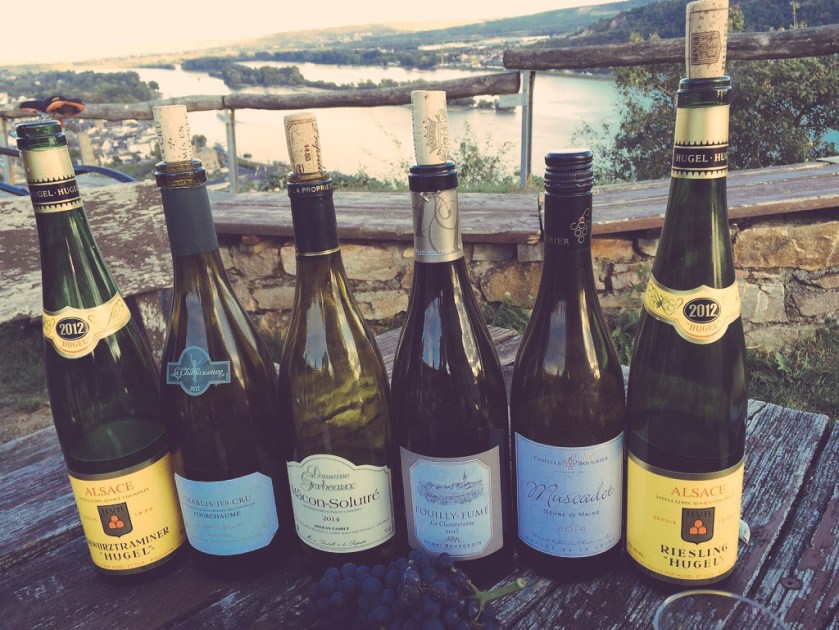
From different regions, with different grapes varietals, and at different quality levels, this journey through French whites paints a fairly inclusive picture of the French white wine scene. Obviously this is not a complete showing of all white wines available in France, but it is a starting point to understanding the range of whites available.

IMG_2051-1024x768

From right to left:

2012 Riesling, Alsace

Alsace is a region of France that boarders Germany. In fact, the land has been tossed back and forth between German and French rule throughout the centuries. Understanding this, the production of Riesling makes sense as an extension of the German quality of the region.

Alsace is the only area in France that names its wines based on the grape varietal, thus making it the easiest wine region in France to understand. The vast majority of wine is also made by producers, rather than by specific châteauxs.

This dry Riesling has floral and minerality on the nose. Petrol notes are already evident in the 3 year-old wine. This wine presents itself a little creamy – a change from many of the clear and unmuddled Rieslings throughout Germany. In true Riesling style, it has the trusted acidic kick. At 12%, the alcohol is evident in the body and flavour. Flavours of under-ripe plums, limy citrus, flint, wood, and stone. Has a big, long, floral finish.

2014 Muscadet, Loire

This wine is made from the Melon de Bourgogne grape, and yet is not from Bourgogne (Burgundy in English). It comes from the Loire region closest to the Atlantic Ocean. This is important in understanding the coastal conditional under which these grapes grow, versus continental.

This wine reminds me of a Sauvignon Blanc in that it has a vegetal and floral quality. It is light and has notes of honey, anise, and sage.

2013 Pouilly-Fumé, Loire

This wine is 100% Sauvignon Blanc. On the nose, it has an exaggerated sweet floral quality. As one would assume for a Sauvignon Blanc, it is a little vegetal and smells and tastes like grapefruit (though lacking in the notorious “cat piss” characteristic). It is smooth, with strong under-ripe flavours. It has a bitter aftertaste, but no sharp acidity.

2014 Mâcon-Solutré, Burgundy

Like all whites from the Burgundy region, this is a Chardonnay. This particular region (Mâcon-Solutré) is known for lighter Chardonnays. This wine is still very fatty, nutty, and buttery. There is no crispness or acidity on the nose, and only a faint moment of clarity on the palette.

2012 Chablis 1er Cru, Burgundy

This Chardonnay is of notable higher quality and is longer aged than the 2014 Mâcon-Solutré. As expected, it is indeed rounder and more dynamic. There is a refreshing acidic note, a little more oakiness, but is still very fatty, nutty, and buttery.

2012 Gewürztraminer, Alsace

Coming full circle, we find ourselves once again in Alsace. Alsace is perhaps best known for their Gewürztraminer. Though fairly typical in flavour, this wine sings quite a “one note” song. It is overtly sweet, with strong, perfumey rose, lychee, and orange blossom aromas. The only characteristic that adds to its complexity is a slight nutmeg attribute. The taste also lingers due to the higher sugar levels.